Summary

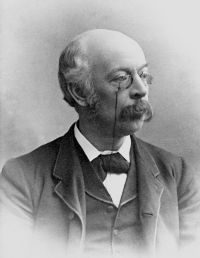
Portrait of Robert Adamson Robert Adamson 1911 Encyclopædia Britannica, Volume 5… (1911)

Self-consciousness, which was, even with Kant, the nodus or kernel whence the categories sprang, was nothing but a logical centre,—the reality was concealed. There was thus a dualism, to overcome which is the first step in the Hegelian system. The principle, if there is to be one, must be universally applicable, all-comprehensive. Self-consciousness is precisely the principle wanted; it is a unity, an identity, containing in itself a multiplicity. The universal in absolute self-consciousness is just pure thinking, which in systematic evolution is the categories
Source: Wikisource

Portrait of Robert Adamson Robert Adamson 1911 Encyclopædia Britannica, Volume 5… (1911)

Further, the categories cannot without careful explanation be defined as predicates; they are this and something more. The most important category, οὐσία, in one of its aspects cannot be predicate at all.
In the Κατηγορίαι Aristotle prefixes to his enumeration a grammatico-logical disquisition on homonyms and synonyms, and on the elements of the proposition, i.e. subject and predicate. He draws attention to the fact that things are spoken of either in the connexion known as the proposition, e.g. “a man runs,” or apart from such connexion, e.g. “man” and “runs.”
Source: Wikisource

Portrait of Robert Adamson Robert Adamson 1911 Encyclopædia Britannica, Volume 5… (1911)

The same law that obtains among the categories is found adequate to an explanation of the external thing which had so sadly troubled Kant. The categories themselves are moments of the universal of thought, type forms, or definite aspects which thought assumes; determinations, Bestimmungen, as Hegel most frequently calls them. They evolve by the same law that was found to be the essence of ultimate reality—i.e. of self-consciousness. The complete system is pure thought, the Universal par excellence.
Source: Wikisource

Get perspective with Kwize: daily news enlightened by great literature