Summary

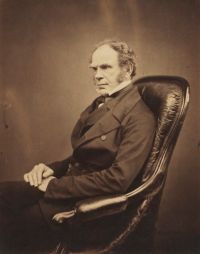
Portrait of Robert Wight Robert Wight Illustrations of Indian Botany… (1840)

On the contrary, I feel quite convinced that the country would derive immense advantage from their more general culture, on the simple principle of their enabling us to bring extensive tracks of country under cultivation, that are now either waste, or of comparatively little value, since, on such the American cottons can be cultivated, while the Indian would altogether fail, it requiring a soil both rich and retentive of moisture for the attainment of its highest degree of perfection.
Source: Wikisource

Portrait of Robert Wight Robert Wight Illustrations of Indian Botany… (1840)

They are all tropical plants, for the most part large trees, and most abouud in America : those of Asia being limited to a few genera, with rarely more than two species to each — three or four only are found in Africa, among which however, is that most extraordinary of trees, the Colossus of the vegetable kingdom, the Adansonia digitata, a tree, which has been estimated to live thousands of years, and the trunk of which is said sometimes to attain the astonishing circumference of 80 or 90 feet, and to afford in its hollow, when decayed by age or disease, accommodation for several families.
Source: Wikisource

Portrait of Robert Wight Robert Wight Illustrations of Indian Botany… (1840)

The seed of several species of Sterculia are roasted and eat by the natives of this country ; but by far the most important plant of the order, at least in a dietetic point of view, is the Cacoa tree. This is a native of America, and has been introduced into India. Hitherto our attempts at culture have not been very successful, but I saw several very thriving young trees at Courtallum, and there is one at Palatncottah which annually bears a crop of fruit, and gives promise that it might be increased.
Source: Wikisource

Get perspective with Kwize: daily news enlightened by great literature