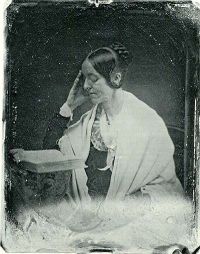
Sarah Margaret Fuller

Sarah Margaret Fuller

Summary

Portrait of Sarah Margaret Fuller Sarah Margaret Fuller Woman in the Nineteenth Century (1845)

Iphigenia is more like one of the women Shakspeare loved than the others; she is a tender virgin, ennobled and strengthened by sentiment more than intellect, what they call a woman par excellence.
Macaria is more like one of Massinger's women. She advances boldly, though with the decorum of her sex and nation:
Her speech when she offers herself as the victim, is reasonable, as one might speak to-day. She counts the cost all through.
Source: Wikisource

Portrait of Sarah Margaret Fuller Sarah Margaret Fuller Woman in the Nineteenth Century (1845)

I solicit of women that they will lay it to heart to ascertain what is for them the liberty of law. It is for this, and not for any, the largest, extension of partial privileges that I seek. I ask them, if interested by these suggestions, to search their own experience and intuitions for better, and fill up with fit materials the trenches that hedge them in. From men I ask a noble and earnest attention to any thing that can be offered on this great and still obscure subject, such as I have met from many with whom I stand in private relations.
Source: Wikisource

Portrait of Sarah Margaret Fuller Sarah Margaret Fuller Woman in the Nineteenth Century (1845)

Except in a purer simplicity of speech and manner, he might be a modern and a Christian. But Achilles is cast in the largest and most vigorous mould of the earlier day: his nature is one of the richest capabilities, and therefore less quickly unfolds its meaning. The impression it makes at the early period is only of power and pride; running as fleetly with his armor on, as with it off; but sparks of pure lustre are struck, at moments, from the mass of ore. Of this sort is his refusal to see the beautiful virgin he has promised to protect.
Source: Wikisource

Get perspective with Kwize: daily news enlightened by great literature