Summary

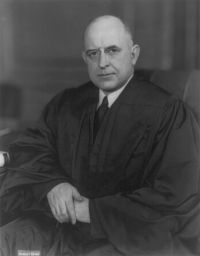
Portrait of Stanley Forman Reed Stanley Forman Reed,  Fisher v. United States — Dissent

“ When a man's life or liberty is at stake he should be adjudged according to his personal culpability as well as by the objective seriousness of his crime. That elementary principle of justice is applied to those who kill while intoxicated or in the heat of passion; if such a condition destroys their deliberation and premeditation the jury may properly consider that fact and convict them of a lesser degree of murder. No different principle should be utilized in the case of those whose mental deficiency is or a more permanent character. ”
Source: Wikisource

Portrait of Stanley Forman Reed Stanley Forman Reed,  Fisher v. United States — Dissent

“ Especially where life is at stake it is requisite that the trial judge should so guide the jury that the jurors may be equipped to determine whether death should be the penalty for conduct. Of course society must protect itself. But surely it is not self-protection for society to take life without the most careful observance of its own safeguards against the misuse of capital punishment. ”
Source: Wikisource

Portrait of Stanley Forman Reed Stanley Forman Reed,  Fisher v. United States — Dissent

“ This Court cannot escape responsibility for the death sentence if it affirms the judgment. One can only hope that even more serious consequences will not follow, which would be the case if the Court's decision were to give encouragement to doctrines of criminal law that have only obscurantist precedents of the past to recommend them. Moreover, a failure adequately to guide a jury on a basic issue, such as that of premeditation on a charge of murder in the first degree, does not reflect a 'long established' practice, and one hopes will not become 'deeply rooted,' in the District. ”
Source: Wikisource

Get perspective with Kwize: daily news enlightened by great literature