Summary

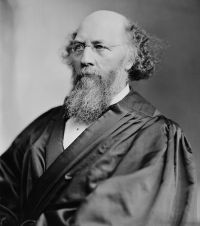
Portrait of Stephen Johnson Field Stephen Johnson Field Stockwell v. United States — Dissent

I cannot reconcile to either law or justice the doctrine that a person can be charged and punished for knowingly doing a thing of which he never had any actual knowledge; and that in a proceeding to enforce penalties imposed for knowingly doing a thing charged, the knowledge, which is an essential ingredient of the offence, can be conclusively imputed to him from its possession by another.
Source: Wikisource

Portrait of Stephen Johnson Field Stephen Johnson Field Stockwell v. United States — Dissent

Presumptions are conclusions which the law draws from a particular state of facts, and the law does not draw from the mere fact of partnership the conclusion that one partner approves or is cognizant of the illegal acts of the other, but, on the contrary, the presumption of innocence, which every one may invoke for his protection when accused, repels such conclusion.
Source: Wikisource

Portrait of Stephen Johnson Field Stephen Johnson Field Stockwell v. United States — Dissent

The claim in question, it is to be remembered, is not made for the forfeiture of the goods; that would follow from the act of illegal importation, without reference to the parties engaged. Neither is it made for the duties, for the right to them accrues to the government upon the importation. The claim is not for indemnification, but for penalties prescribed.
The principle upon which partners are made liable for the acts of each other is that each partner is the general agent of the partnership in all matters within the scope and objects of the partnership business.
Source: Wikisource

Get perspective with Kwize: daily news enlightened by great literature