“ I cannot become familiar with the fact that a moment, the time necessary for a carriage, as in this case, to turn a corner, or for those two steel muscles of the engine to play upon each other, can do so complete and wonderful a thing as to break the continuity of intercourse, to remove a living presence. The substitution of an image for a reality, the present broken off short and replaced by the past; enumerating this by no means gives the equivalent of that odd and unnatural word GONE. And the terror of death itself lies surely in its being the most sudden and utter act of going away. ”
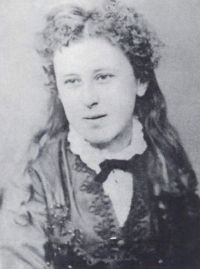
Vernon Lee
Summary
Hortus Vitae, a philosophical essay collection by Vernon Lee, explores the interplay between memory, presence, and the transient nature of human experience. Through reflections on courtship, friendship, and the symbolic resonance of objects such as gardens and bicycles, Lee examines how the past enriches the present, framing life as an ongoing act of appreciation rather than mere accumulation. Central to the work is the tension between reality and perception, underscored by musings on impermanence and the quiet joys of daily existence.
The text, structured around poetic observations and dialogues with "other folk," positions the garden as both a metaphor for cultivated life and a testament to the enduring value of small, thoughtful pleasures. Lee’s synthesis of introspection and natural imagery ultimately asserts that true vitality lies in recognizing the interconnectedness of time, emotion, and the fleeting beauty of shared moments.
Quotes from Hortus Vitae (Vernon Lee)
“ Nay, one might say that the knowledge of how many times life can begin afresh, the knowledge of the new modes of happiness which may succeed each other, even when the leaves float down yellow in the still air, and the dews on the renovated grass are white like frost, is one of the blessed secrets into which the passing seasons initiate those who have honourably cultivated the garden of life, and life's wide common acres.Indeed, such faith in the heart's renewed fruitfulness is itself among the autumn blossomings, the hidden compensations. ”
“ And I felt, as I leaned against the parapet watching for my train's smoke coming towards me, not the loss, but rather the inestimable gain which a kindly past represents. Years gone by? Nay, rather years which make endurable, which furnish and warm the present, giving it sweetness and significance. How very poor we must be in our early youth, with no possessions like these; and how rich in our later life, with many years distilled into the essence of a single to-day! ”
