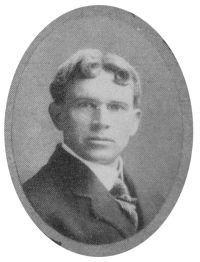
Vernon Louis Parrington

Vernon Louis Parrington

Summary

Portrait of Vernon Louis Parrington Vernon Louis Parrington The Cambridge History of American Literature (1917)

Posterity has been too negligent of John Wise hitherto. Although possessed of the keenest mind and most trenchant pen of his generation of Americans, he was untainted by any itch of publicity, and so failed to challenge the attention of later times. Nevertheless, what we know of him is to his credit. An independent man, powerful of body, vigorous of intellect, tenacious of opinion, outspoken and fearless in debate, he seems to have understood the plain people whom he served, and he sympathized heartily with the democratic ideals then taking shape in the New England village.
Source: Wikisource

Portrait of Vernon Louis Parrington Vernon Louis Parrington The Cambridge History of American Literature (1917)

One may well hesitate to describe Cotton Mather; the man is unconceivable to one who has not read his diary. Unlike Increase, he was provincial to the core. Born and bred in Boston, his longest trips into the outer world carried him only a few miles from the Old North Meeting-house, where for years he served as co-labourer with his father. Self-centred and self-righteous, the victim of strange asceticisms and morbid spiritual debauches, every circumstance of his life ripened and expanded the colossal egotism of his nature.
Source: Wikisource

Portrait of Vernon Louis Parrington Vernon Louis Parrington The Cambridge History of American Literature (1917)

For in his mildly persistent way John Cotton was a revolutionist. A noble ideal haunted his thought, as Utopian as any in the long roll of Utopian dreams—the ideal of a Christian theocracy which should supersede the unchristian government which Englishmen had lived under hitherto. A devout scripturist, he accepted the Hebrew Bible as the final word of God, not to be played fast and loose with but to be received as a rule of universal application, perfect to the last word and least injunction. The sufficiency of the Scriptures to social needs was an axiom in his philosophy
Source: Wikisource

Get perspective with Kwize: daily news enlightened by great literature