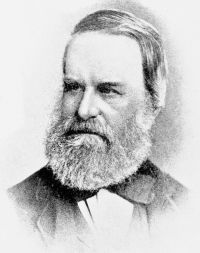
William Alexander Greenhill

William Alexander Greenhill

Summary

Portrait of William Alexander Greenhill William Alexander Greenhill Dictionary of National Biography… (1895)

Ogle was much esteemed us a man of high professional and private character. His house at Oxford was the rendezvous of a wide circle of friends. By nature cautious, he was inclined to adhere to the older traditions of his profession, from the active practice of which he withdrew in his later years, although attending old friends and giving gratuitous advice to the poor. But he offered no opposition to the more modern developments of scientific study at the infirmary and in the university, which were the subject of keen controversy at the time.
Source: Wikisource

Portrait of William Alexander Greenhill William Alexander Greenhill Dictionary of National Biography… (1891)

He was one of the presidents of the Royal Medical Society of Edinburgh, he held the offices of house-physician and house-surgeon at the Royal Infirmary, and he and his intimate friend Dr. George Julius passed the two best examinations of the year. On leaving Edinburgh in December 1825 he became a student at St. Bartholomew's Hospital, London, and in the spring of 1826 obtained the diploma of the Royal College of Surgeons. Though he restricted himself rigidly in after life to the practice of medicine, his knowledge of surgery gave him a confidence which he could never otherwise have enjoyed.
Source: Wikisource

Portrait of William Alexander Greenhill William Alexander Greenhill Dictionary of National Biography… (1891)

In 1874 a vice-provost was on Hawkins's petition to the visitor (the crown) appointed at Oriel, and Hawkins, at the age of eighty-five, finally left Oxford. He retired to his house in the precincts at Rochester, where he had almost always been a reformer among his fellow-canons. He protested in vain in 1875 against the future severance of the canonry at Rochester from the provostship of Oriel, and in 1879 addressed a memorial to the Oxford University commissioners against the abolition at Oriel of the necessity for all the fellows, except three, to be in holy orders.
Source: Wikisource

Get perspective with Kwize: daily news enlightened by great literature