Summary

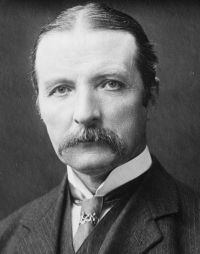
Portrait of William Archer William Archer Through Afro-America: An English Reading of the Race Problem

This horror is all the more acute—all the more morbid, if you will—because the white race is conscious of its own frailty, and knows that it is, in some sense, fighting a battle against perfidious nature. It is a hard thing to say, but I have little doubt it is true, that much of the injustice and cruelty to which the negro is subjected in the South is a revenge, not so much for sexual crime on the negro’s part, as for an uneasy conscience or consciousness on the part of the whites.
Source: Gutenberg

Portrait of William Archer William Archer Through Afro-America: An English Reading of the Race Problem

In their milder moods they call him an opportunist and time-server; in moments of irritation they call him a betrayer of his people, and a pitiful truckler to the white man. He is, in fact, nothing of the sort; on the wrongs of his race he has spoken with no uncertain voice, when he felt it to be in season; but he has not harped upon them in and out of season. While he has plenty of race-pride, he has no race-vanity, and realizes that the negro has yet to conquer his place among the fully-developed and civilized races of the world.
Source: Gutenberg

Portrait of William Archer William Archer Through Afro-America: An English Reading of the Race Problem

HAVANA TO PANAMA
246 I
THE AMERICAN IN CUBA I have known few more curious sensations than that of crossing in a single night from Florida to Cuba: leaving the New World at ten p.m. and arriving at six a.m. in the Old World. For Havana is distinctly an Old World city—more so, I am told, than some of the cities of modern Spain. From the moment the steamer passes between Morro Castle and La Punta, and skirts beneath the grey and pink cliffs of the huge idle fortress of La Cabana, one feels that one has left behind the region of the Immature, and entered upon that of the Over-ripe.
Source: Gutenberg

Get perspective with Kwize: daily news enlightened by great literature