Summary

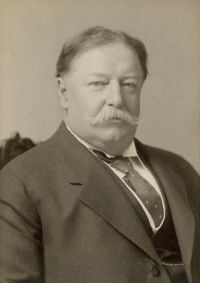
Portrait of William Howard Taft William Howard Taft Appleby v. City of New York — Opinion of the Court

It is apparent from these decisions that, under the law of New York when these cases were decided, whenever the Legislature deemed it to be in the public interest to grant a deed in fee simple to land under tidal waters and exclude itself from its exercise as sovereign of the jus publicum (that is, the power to preserve and regulate navigation) , it might do so, but that the conclusion that it had thus excluded the jus publicum could only be reached upon clear evidence of its intention and of the public interest in promotion of which it acted.
Source: Wikisource

Portrait of William Howard Taft William Howard Taft Appleby v. City of New York — Opinion of the Court

The necessary effect of the Langdon Case, which has always been a leading authority in the state of New York, is that a grant upon a valuable consideration of the easement of wharfage related to land under water conveyed by the city by authority of the state, for the purpose of promoting commerce and the harbor of the city, taken away from the city and state the power to regulate navigation in any way which would interfere with or obstruct the grant, and that, if the city desired in the interest of navigation to obstruct such easement, it must acquire it by condemnation.
Source: Wikisource

Portrait of William Howard Taft William Howard Taft Appleby v. City of New York — Opinion of the Court

But there can be no doubt of the right of Parliament in England, or the Legislature of this state, to make such grants, when they do not interfere with the vested rights of particular individuals. The right to navigate the public waters of the state and to fish therein, and the right to use the public highways, are all public rights belonging to the people at large. They are not the private unalienable rights of each individual.
Source: Wikisource

Get perspective with Kwize: daily news enlightened by great literature