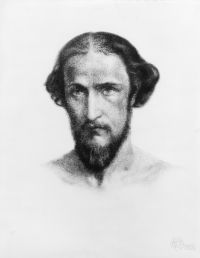
William James Stillman

William James Stillman

Summary

Portrait of William James Stillman William James Stillman,  The Atlantic Monthly (1866)

“ And when you finally leave Rome, as you must some day, you will always harbor a small canker-worm of immitigable grief, that you did not purchase one stone you saw and thought too high-priced; and will pass thenceforward no curiosity-shop without looking in the windows a moment, in the hope of finding some gem strayed away into parts where no man knows its value. If you feel in you the capacity of loving them, let them alone. ”
Source: Wikisource

Portrait of William James Stillman William James Stillman,  The Atlantic Monthly (1866)

“ It is hard to define a "civilization"; and we talk of the ages of gold and of bronze as if we knew the history of the whole world and its generations; but to me the few glimpses I get through the crevices of the ages that hide Etruria, as the hills of the Black Forest hide the fairies from the German child, indicate an age more fitting the epithet Golden than any since, and a nation the like of which, as of the good-folk, we shall see no more on earth. ”
Source: Wikisource

Portrait of William James Stillman William James Stillman,  The Atlantic Monthly (1866)

“ The Scarabæus then, instead of the rude, straightforward representation of the Egyptian workman, assumes a more elegant form, with elaborate sculpture of all the insect characteristics, the edges of the wings and the lines that divide them from the chest being exquisitely beaded and wrought, and the claws being relieved and modelled with the highest care and most artistic finish. The form of the image, in fact, generally resembles more the beautiful green beetle which I have often caught in the mountains around Rome, than his plebeian and utilitarian cousin, the Scarabæus pilularius. ”
Source: Wikisource

Get perspective with Kwize: daily news enlightened by great literature