Summary

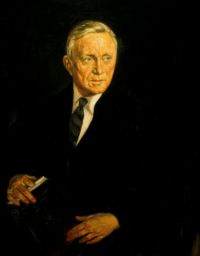
Portrait of William O. Douglas William O. Douglas New York v. United States (331 U.S. 284…

Unreasonable rates-whether unreasonably high or unreasonably low-even on a fraction of the freight, may make the difference between earnings to which carriers are entitled under the Interstate Commerce Act and those to which they are not entitled for discharging their duty as part of the national transportation system. We are without informing findings on these issues. But even if one were to consider questions of discrimination is isolation, inequality-the essence of discrimination-cannot be dealt with mechanically by taking a percentage off one territory and adding it to another.
Source: Wikisource

Portrait of William O. Douglas William O. Douglas New York v. United States (331 U.S. 284…

Discrimination heretofore has been found to exist only when an unequal charge was exacted for a like service, or vice versa. But now it is held to be an unlawful discrimination if railroads of the Northeast do not make the same charge as other railroads in the South or West, for a different transportation under different cost conditions. The Government frankly advocates this new concept of discrimination as necessary to some redistribution of population in relation to resources that will reshape the nation's social, economic and perhaps its political life more nearly to its heart's desire.
Source: Wikisource

Portrait of William O. Douglas William O. Douglas New York v. United States (331 U.S. 284…

It is sufficient at this point to say that the record makes out a strong case for the inference that natural disadvantages alone are not responsible for the retarded development of the South and the West, that the discriminatory rate structure has also played a part. How much a part cannot be determined, for every effect is the result of many factors. But the inference of prejudice from the discriminatory rate structure is irresistible.
Source: Wikisource

Get perspective with Kwize: daily news enlightened by great literature