Summary

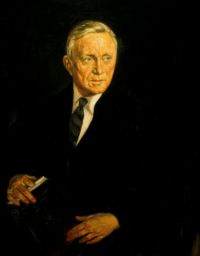
Portrait of William O. Douglas William O. Douglas Walz v. Tax Commission of the City of New York…

Who does not see that the same authority which can establish Christianity, in exclusion of all other Religions, may establish with the same ease any particular sect of Christians, in exclusion of all other Sects? That the same authority which can force a citizen to contribute three pence only of his property for the support of any one establishment, may force him to conform to any other establishment in all cases whatsoever?
Source: Wikisource

Portrait of William O. Douglas William O. Douglas Walz v. Tax Commission of the City of New York…

Above all are they to be considered as retaining an 'equal title to the free exercise of Religion according to the dictates of conscience.' Whilst we assert for ourselves a freedom to embrace, to profess and to observe the Religion which we believe to be of divine origin, we cannot deny an equal freedom to those whose minds have not yet yielded to the evidence which has convinced us. If this freedom be abused, it is an offence against God, not against man: To God, therefore, not to men, must an account of it be rendered. As the Bill violates equality by subjecting some to peculiar burdens
Source: Wikisource

Portrait of William O. Douglas William O. Douglas Walz v. Tax Commission of the City of New York…

Before any man can be considered as a member of Civil Society, he must be considered as a subject of the Governor of the Universe: And if a member of Civil Society, who enters into any subordinate Association, must always do it with a reservation of his duty to the general authority; much more must every man who becomes a member of any particular Civil Society, do it with a saving of his allegiance to the Universal Sovereign. We maintain therefore that in matters of Religion, no man's right is abridged by the institution of Civil Society, and that Religion is wholly exempt from its cognizance.
Source: Wikisource

Get perspective with Kwize: daily news enlightened by great literature