Summary

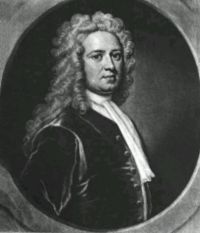
Portrait of William Stukeley William Stukeley The Philosophy of Earthquakes, Natural and Religious (1750)

The aurora borealis, australis, all kind of coruscations, meteors, lightning, thunder, fire-balls are the effects, and may reciprocally be the cause of electricity; but how in particular we know not. Come we to the animal world, we must needs assert, that all motion voluntary, involuntary, generation, even life itself: all the operations of the vegetable kingdom, and an infinity more of nature’s works, are owing to the activity of this electric fire, the very soul of the material world.
Source: Wikisource

Portrait of William Stukeley William Stukeley The Philosophy of Earthquakes, Natural and Religious (1750)

This last comparison would have pleased some of the ancients, who would needs fancy, that the globe of the earth was a great animal. Plato, Plutarch, and others, had such kind of sentiments. Whence one may imagine, that they would conceive an earthquake to be, as when a horse shakes a part of his skin, upon a fly touching him. Some of our correspondents express the motion of an earthquake to be like a boat lifted up by one wave, let down by another.
Source: Wikisource

Portrait of William Stukeley William Stukeley The Philosophy of Earthquakes, Natural and Religious (1750)

We who have advanc'd both the natural, and moral, should, as the ancients did, join them both together. By this means, we gather, the truth of the highest, and most excellent philosophy, to be found in those volumes of first antiquity, which we call sacred: and which, 't is our peculiar, and inestimable happiness to possess. We should adore that divine light, which they hold forth to us.
Source: Wikisource

Get perspective with Kwize: daily news enlightened by great literature