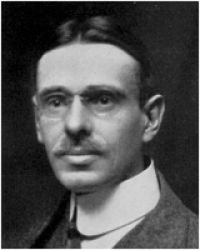
William Tyler Olcott

William Tyler Olcott

Summary

Portrait of William Tyler Olcott William Tyler Olcott Star Lore Of All Ages — The Pleiades (1911)

This little group of stars, twinkling so timidly in the nights of autumn in the eastern heavens, links the races of mankind in closer relationship than any bonds save nature's. No wonder that they have inspired universal awe and admiration, that within this group of suns man has sought to find the very centre of the universe.
Among the Aztecs of South America we find the Pleiades the cynosure of all eyes, a nation trembling at their feet.
Source: Wikisource

Portrait of William Tyler Olcott William Tyler Olcott Star Lore Of All Ages — The Pleiades (1911)

No group of stars known to astronomy has excited such universal attention as the little cluster of faint stars we know as "the Pleiades." In all ages of the world's history they have been admired and critically observed. Great temples have been reared in their honour. Mighty nations have worshipped them, and people far removed from each other have been guided in their agricultural and commercial affairs by the rising and setting of these six close-set stars.
Source: Wikisource

Portrait of William Tyler Olcott William Tyler Olcott Star Lore Of All Ages — The Pleiades (1911)

The blacks of Victoria, Australia, have a myth in which the Pleiades are considered a host of young wives. Another myth relates that these stars were once pretty maidens on the earth who were followed by some young men called "the Beriberi." To get away from them, the girls climbed into the tree-tops, and thence sprang into the heavens, where they were transformed into shining bodies. One maiden remained behind. She was called "the shy one," and is represented by the least bright star in the group. The Beriberi were eventually placed in the heavens where they appear in the girdle of Orion.
Source: Wikisource

Get perspective with Kwize: daily news enlightened by great literature