“ She had thrown her mantilla back, to show her shoulders, and a great bunch of acacia that was thrust into her chemise. She had another acacia blossom in the corner of her mouth, and she walked along, swaying her hips, like a filly from the Cordova stud farm. In my country anybody who had seen a woman dressed in that fashion would have crossed himself. At Seville every man paid her some bold compliment on her appearance. ”
Acacia
Definition and stakes
Acacia, a genus comprising approximately 1,084 species of shrubs and trees in the Fabaceae family, is celebrated for its ecological adaptability and symbolic significance. Primarily native to Australia, with distributions extending into New Guinea and Southeast Asia, it includes species such as the golden-flowered wattles, distinguished by their bipinnate foliage and pod-like fruits.
Writers have long explored Acacia’s dual nature: Prosper Mérimée highlights its sensuality in Carmen, while T. L. Mitchell praises its visual contrast within Australian scenery. Thomas Moore, on the other hand, portrays it as an emblem of endurance in wild landscapes. These diverse viewpoints—ranging from botanical analysis to literary imagery—emphasize Acacia’s function as both a natural essential and a cultural icon, linking ecological importance with human creativity.
Quotes about “Acacia”
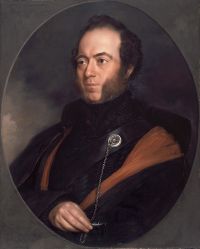 T. L. Mitchell,
Three Expeditions into the Interior of Eastern Australia…
T. L. Mitchell,
Three Expeditions into the Interior of Eastern Australia…
“ In describing the trees which ornamented the river scenery I must not omit to mention a long-leaved acacia whose dark stems and sombre foliage, drooping over the bank, presented a striking and pleasing contrast to the yarra trunks, and the light soil of the water-worn banks. The bimbel (or spear-wood) which grows on dry forest land, the pine-like Callitris pyramidalis on red sandhills, and a variety of acacias in the scrubs, generally present groups of the most picturesque description. ”
Henrietta Dumont, The language of flowers (1851)
“ How hope to draw an angel from above? Willis. Acacia.... Friendship.The Acacia is a native of North America, from Canada to the Carolinas, and was consecrated by the Indians to the goddess of chaste love. Their bows were made of the incorruptible wood of this tree, and their arrows were pointed with its thorns. About a century ago, this tree was introduced into France by Robin, the botanist. It is a large, handsome tree, of quick growth, elegant foliage, and beautiful, rose-coloured blossoms. ”


Related terms
Authors who wrote about “Acacia”
 Albert Mackey
 Élisée Reclus
 John Oxley
 John Ball
 Prosper Mérimée
 Charles Dudley Warner
 Thomas MooreT. L. Mitchell
 I. A. R. Wylie
 Elizabeth Barrett Browning
 W. M. Flinders Petrie
 Richard WatsonAnthony Florian Madinger WillichJanet Millett
 Frank CundallHenrietta Dumont
 Lewis Spence
 Mayne ReidJohn Duncan
 George Matthews Bennett