Acts of Union 1707

Definition and stakes

Reformed Presbytery of North America Act, Declaration, & Testimony for the Whole of our Covenanted Reformation…

Thus, this nation, by engrossing the English act, establishing Prelacy, and all the superstitious ceremonies, in the act of the union parliament, and by annulling all acts contrary to the united settlement, have sealed, as far as men can do, the gravestones formerly laid upon the covenanted uniformity of the nations. To all which the revolution church, by consenting, and practically approving this unhallowed union, have said Amen
Source: Gutenberg

Against Home Rule: The Case for the Union

It has been made a charge against the Union that during some disturbed periods of the nineteenth century the United Parliament had to pass "Coercion" Acts at the rate of nearly one every session. The complainants should look nearer home and they would find from the records of the Irish Legislature that during the "halcyon" days of "Grattan's Parliament"—the eighteen years between 1782 and the Union—no less than fifty-four Coercion Acts were passed, some of them of a thoroughness and ferocity quite unknown in later legislation.
Source: Gutenberg

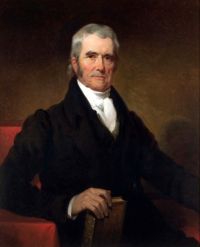
Portrait of John Marshall John Marshall McCulloch v. Maryland — Opinion of the Court

If any one proposition could command the universal assent of mankind, we might expect it would be this — that the Government of the Union, though limited in its powers, is supreme within its sphere of action. This would seem to result necessarily from its nature. It is the Government of all; its powers are delegated by all; it represents all, and acts for all. Though any one State may be willing to control its operations, no State is willing to allow others to control them. The nation, on those subjects on which it can act, must necessarily bind its component parts.
Source: Wikisource

Get perspective with Kwize: daily news enlightened by great literature