“ They had been sitting in the famous garden of the Cappucini Hotel at Amalfi. To Marcella's left, far below the high terrace of the hotel, the green and azure of the Salernian gulf shone and danced in the sun, to her right a wood of oak and arbutus stretched up into a purple cliff—a wood starred above with gold and scarlet berries, and below with cyclamen and narcissus. From the earth under the leafy oaks—for the oaks at Amalfi lose and regain their foliage in winter and spring by imperceptible gradations—came a moist English smell. ”
Amalfi
Definition and stakes
Amalfi, a coastal town in southern Italy, has long captivated writers with its dramatic landscapes and rich history. Authors such as John Addington Symonds and Lilian Whiting evoke its ethereal beauty, describing moonlit cliffs and shimmering seas, while Fredrika Bremer and George Eliot highlight its historical grandeur and decline.
Mrs. Humphry Ward and Fanny Charlotte Anne Boothby emphasize its sensory appeal, from fragrant gardens to tranquil boat rides. These varied portrayals collectively underscore Amalfi’s enduring resonance as a symbol of both romantic idealism and tangible cultural heritage.
Quotes about “Amalfi”
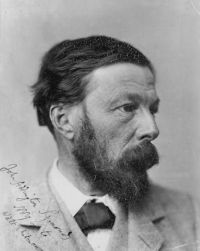 John Addington Symonds,
Sketches and Studies in Italy and Greece…
John Addington Symonds,
Sketches and Studies in Italy and Greece…
“ The mountains, clear and calm, with light-irradiated chasms and hard shadows cast upon the rock, soar up above a city built of alabaster, or sea-foam, or summer clouds. The whole is white and wonderful: no similes suggest an analogue for the lustre, solid and transparent, of Amalfi nestling in moonlight between the grey-blue sea and lucid hills. Stars stand on all the peaks, and twinkle, or keep gliding, as the boat moves, down the craggy sides. ”
 Fredrika Bremer,
Life in the Old World
(1860)
Fredrika Bremer,
Life in the Old World
(1860)
“ Amalfi, with its white churches and houses, lies upon lofty rock-terraces, on the shore of the Bay of Salerno. One clambers up amidst valleys of luxuriant vegetation. The former powerful city, with its population of fifty thousand souls, and which alone ruled the trade with the East, is now an unimportant town of three thousand inhabitants, a few manufactories of macaroni and paper, together with a great number of beggars. These swarmed like flies, both outside and inside the Cathedral, the sole but splendid remains of the ancient grandeur of Amalfi. ”



Related terms
Authors who wrote about “Amalfi”
Herbert M. VaughanErnesto BuonaiutiArthur H. NorwayFanny Charlotte Anne BoothbyMary Wollstonecraft ShelleyJohn Addington SymondsVariousF. Marion CrawfordJ. N. LarnedFredrika Bremer Lilian WhitingGiovanni BoccaccioHenry Hallam
 Louis Couperus
 George Eliot
 L. Frank Baum
 Mrs. Humphry WardCharles Neville Buck
 Alexandre Dumas
 George Gissing
John Addington SymondsVariousF. Marion CrawfordJ. N. LarnedFredrika BremerLilian WhitingGiovanni BoccaccioHenry HallamLouis CouperusGeorge EliotL. Frank BaumMrs. Humphry WardCharles Neville BuckAlexandre DumasGeorge Gissing