Arapaho people

Definition and stakes

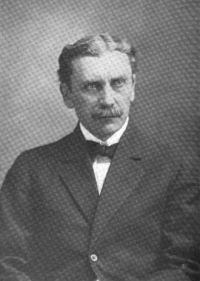
Portrait of James Mooney James Mooney,  The Ghost-dance religion and the Sioux outbreak of 1890

“ They are commonly known as northern Arapaho, to distinguish them from the other large division living now in Oklahoma. The Kiowa distinguished them as Tägyä′ko, “sagebrush people,” a translation of their proper name, Baachinĕna. Although not the largest division, the Baachinĕna claim to be the “mother people” of the Arapaho, and have in their keeping the grand medicine of the tribe, the sĕicha or sacred pipe. ”
Source: Gutenberg

Portrait of James Mooney James Mooney,  The Ghost-dance religion and the Sioux outbreak of 1890

“ They have a military organization similar to that existing among the Arapaho and other prairie tribes, as described under number 43 of the Arapaho songs. Above all the tribes of the plains they are distinguished for their desperate courage and pride of bearing, and are preeminently warriors among people whose trade is war. They are strongly conservative and have steadily resisted every advance of civilization, here again differing from the Arapaho, who have always shown a disposition to meet the white man half-way. ”
Source: Gutenberg

Portrait of James Mooney James Mooney,  The Ghost-dance religion and the Sioux outbreak of 1890

“ These were formerly a distinct tribe and at war with the other Arapaho. They are represented as having been a very foolish people in the old times, and many absurd stories are told of them, in agreement with the general Indian practice of belittling conquered or subordinate tribes. They have been incorporated with the northern Arapaho for at least a hundred and fifty years, according to the statements of the oldest men of that band. Their dialect is said to have differed very considerably from the other Arapaho dialects. ”
Source: Gutenberg

Get perspective with Kwize: daily news enlightened by great literature