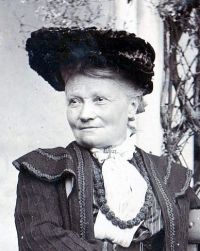
Badakhshan

Definition and stakes

Marco Polo,  The Travels of Marco Polo — Volume 2

“ BADAKHSHAN.
“The Chinese name for ‘Badakhshan’ never appears before the Pa-ta-shan of Kúblái’s time.” (E. H. Parker, Asiatic Quart. Rev., Jan., 1904, p. 143.)
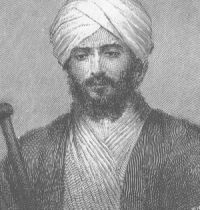
XXX., pp. 164–166. “You must know that ten days’ journey to the south of Badashan there is a province called Pashai, the people of which have a peculiar language, and are Idolaters, of a brown complexion. They are great adepts in sorceries and the diabolic arts. The men wear earrings and brooches of gold and silver set with stones and pearls.
”
Source: Gutenberg

Marco Polo,  The Travels of Marco Polo — Volume 1

“ In 1759, two of the Khojas of Kashgar, escaping from the dominant Chinese, took refuge in Badakhshan; one died of his wounds, the other was treacherously slain by Sultan Shah, who then ruled the country. The holy man is said in his dying moments to have invoked curses on Badakhshan, and prayed that it might be three times depopulated; a malediction which found ample accomplishment. The misery of the country came to a climax about 1830, when the Uzbek chief of Kunduz, Murad Beg Kataghan, swept away the bulk of the inhabitants, and set them down to die in the marshy plains of Kunduz. ”
Source: Gutenberg

Marco Polo,  The Travels of Marco Polo — Volume 1

“ Wilford, in the end of the 18th century, speaks of Faizabad as “the new capital of Badakhshan, built near the site of the old one.” The Chinese map (vide J. R. G. S. vol. xlii.) represents the city of Badakhshan to the east of Faizabad. Faiz Bakhsh, in an unpublished paper, mentions a tradition that the Lady Zobeidah, dear to English children, the daughter of Al-Mansúr and wife of Ar-Rashid, delighted to pass the spring at Jaúzgún, and built a palace there, “the ruins of which are still visible.” ”
Source: Gutenberg

Get perspective with Kwize: daily news enlightened by great literature