F. Marion Crawford, A Lady of Rome
“ There are not many men in the great world like Baldassare del Castiglione, but there are a few; and in the little world, in simple countries, there are more of them than the great world ever dreams of. ”
F. Marion Crawford, A Lady of Rome
“ There are not many men in the great world like Baldassare del Castiglione, but there are a few; and in the little world, in simple countries, there are more of them than the great world ever dreams of. ”
F. Marion Crawford, A Lady of Rome
“ If Baldassare del Castiglione had been the wretch she had the courage to tell him he was when she bade him leave her for ever, Maria Montalto would not have hesitated an instant. He should have gone where justice sends such men, and she would have asked her husband to let her end her days out of the sight of the world she had known. ”
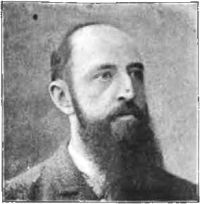 Kazimierz Waliszewski,
Ivan the Terrible
(1904)
Kazimierz Waliszewski,
Ivan the Terrible
(1904)
“ But all this notwithstanding, we are in presence, here, of a society of a very special kind, in which we look in vain for the delicate and sentimental relations between husband and wife depicted by the Italian writers, or the luxurious living so fully described by the French chronicler. Baldassare Castiglione's Cortegiano, which stands nearest, chronologically speaking, to the Domostroï, introduces us to a society in which life, even among artisans, and in the close quarters of the workshop, takes on a certain elegance and artistic distinction ”
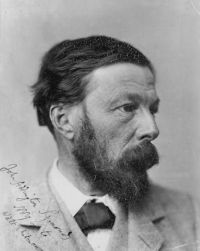 John Addington Symonds,
Renaissance in Italy, Volume 2…
John Addington Symonds,
Renaissance in Italy, Volume 2…
“ The fashion thus set by Leo and the Sacred College was followed by all the eminent men in Rome. The banker Agostino Chigi made himself a name not only by his patronage of painters, but also by the private Greek press founded in his house. [376] Baldassare Turini devoted himself to the arts of building and of decoration. Baldassare Castiglione, as ambassador from Mantua and Ferrara, and Alberto Pio, as prince of Carpi and ambassador from France, dispensed the hospitality of their palaces to scholars, among whom they held no inconsiderable rank on their own merits. ”
John Addington Symonds,
Renaissance in Italy, Volume 5…
“ The characters are very-146- slightly sketched; but the movement is continuous, and the dialogue is always lively. The Calandra achieved immediate success by reproducing both the humor of Boccaccio and the invention of Plautus in the wittiest vernacular. [170] A famous letter of Baldassare Castiglione, describing its representation at Urbino, enlarges upon the splendor of the scenery and dresses, the masks of Jason, Venus, Love, Neptune, and Juno, accompanied by morris-dances and concerts of stringed instruments, which were introduced as interludes. ”
F. Marion Crawford, A Lady of Rome
“ On that very night Montalto fell in love with her, and she with Baldassare del Castiglione, whom she had called Balduccio, and who had called her Maria, ever since they had known each other as little children. On that night she had felt that he was a man, and no longer a boy. It was the first time she had seen him in his new officer’s uniform, for it was not a week since he had got his commission. ”
F. Marion Crawford, A Lady of Rome
“ But all these things could not make the young wife forget Baldassare del Castiglione, who was only a more or less penniless officer in the Piedmont Lancers. The worst of it was that Montalto liked him, instinctively [42] because his name was also so extremely historical, and fatally because husbands are the last to discover their wives’ preferences. Montalto had thrown Maria and Castiglione together.She had gone to confession again and again, for she had been brought up to be very devout. Her confessor told her each time that she must avoid the man she loved and pray to forget him. ”
John R. Effinger, Women of the Romance Countries…
“ Cardinal Pietro Bembo, who had in his youth fallen a victim to the charms of Lucrezia Borgia when she first went to Ferrara; Emilia Pia, the wife of Antonio da Montefeltro, who is described as "a lady of so lively wit and judgment, that she seems to govern the whole company"; and last, but far from least, Baldassare Castiglione, that model courtier and fine wit, who has left a picture of Urbino in his celebrated book Il Cortegiano, which was long known in Italy as Il Libro d'Oro. This volume is an elaborate discussion of the question, What constitutes a perfect courtier ”
F. Marion Crawford, A Lady of Rome
“ Maria turned her head to watch them after she had passed, but her carriage was going at a smart pace and she soon looked before her again. Not far ahead were two officers of the Piedmont Lancers, walking their horses and talking together.One was the same young lieutenant who had jumped his English mare in and out of the ring for her benefit on that morning when she had been on foot. She might have met him there any day. The other was Baldassare del Castiglione, and she had not known that he was in Rome.She was so startled that she made a movement to raise her open parasol and hide her face ”
Baldassarre Castiglione, The Book of the Courtier (1901)
“ His surname is said to be derived from the little town at which Bonaparte defeated the Austrians near Mantua in 1796, and which is by some supposed to have taken its name from Castrum Stiliconis, Camp of Stilico, a Roman general of the 4th century. One Tealdo Castiglione was Archbishop of Milan as early as 1074, from which time the family is often and honourably mentioned in the annals of northern Italy. Baldesar's parents were Count Cristoforo Castiglione, a soldier-courtier, and Luigia Gonzaga, a near kinswoman of the Marquess of Mantua. ”
conte Baldassarre Castiglione, The Book of the Courtier (1901)
“ For many years he lectured at Florence with such success that the Venetians tried to entice him to the University of Padua, in vain. A partisan of the Medici, he enjoyed the favour of Leo X and of Cardinal Giulio, afterwards Clement VII. All his works (written in Latin) are of a philosophical character. His style is said to be sprightly and correct, and despite the ridicule then cast upon the vulgar tongue, he himself translated several of his books into Italian, 346notably the Tre Libri d'Amore, with which Castiglione shows familiarity in the Fourth Book of The Courtier. ”
F. Marion Crawford, A Lady of Rome
“ It had all been a lie from the day when he had come to her pretty booth at the Kermess. Such dreams were inventions of the devil, and nothing but rank poison. She loved Castiglione more than ever, as woman loves man, fiercely, desperately, very sinfully, very shamefully. ”
conte Baldassarre Castiglione, The Book of the Courtier (1901)
“ Having studied at the universities of Paris, Siena and Bologna, he was soon called to the court of Emanuel of Portugal, held various ecclesiastical posts, and was made Bishop of Viseu in the Province of Beira. As ambassador to Popes Leo X, Adrian VI and Clement VII, he paid long visits to Rome, where his friendship with Castiglione probably began. ”
Baldassarre Castiglione, The Book of the Courtier (1901)
“ On Guidobaldo's death in 1508, Castiglione continued in the service of the new duke, Francesco Maria della Rovere ("my lord Prefect" of The Courtier) , who appointed him governor of Gubbio. In the following year he served in his master's campaign against the Venetians, and contracted a dangerous illness, during which he was tenderly nursed by the dowager duchess, Elisabetta Gonzaga. In 1511 he accompanied the duke to Rome on the occasion of the latter's trial for the murder of Cardinal Alidosi, and was active in Francesco Maria's successful defence. ”
F. Marion Crawford, A Lady of Rome
“ Again Castiglione bent his head in assent. Then both were silent for a long time.‘Am I never to know anything of your life after this?’ he asked suddenly.‘You will know what every one may know,’ she said. [179] ‘Nothing more? Only to hear that you are ill or well? Never to be told whether he really does what he can to make it bearable for you? May I not have news of you sometimes? Through Giuliana Parenzo, for instance? Is it to be always outer darkness?’‘Giuliana will know what you all will know, and no more,’ Maria answered. ”
 Luigi Lanzi,
The History of Painting in Italy…
Luigi Lanzi,
The History of Painting in Italy…
“ In this department of the art he is, after Bassano, the first in Italy; and between these two the same difference exists as between Theocritus and Virgil; the first of whom is more true to nature and more simple, the second more learned and more finished. Castiglione, the scholar of those accomplished artists Paggi and Vandyke, ennobles the fields and woods by the fertility and novelty of his invention, by his classical allusions, and his correct and natural expression of the passions. He displays a freedom of design, a facility, grace, and generally a fulness of colour ”
John Addington Symonds,
Renaissance in Italy, Volume 1…
“ Courts being now the only centers in which it was possible for a man of birth and talents to shine, it followed that the perfect courtier and the perfect gentleman were synonymous terms. Castiglione's treatise may therefore be called an essay on the character of the true gentleman as he appeared in Italy. Eliminating all qualities that are special to any art or calling, he defines those essential characteristics which were requisite for social excellence in the sixteenth century. ”
F. Marion Crawford, A Lady of Rome
“ De Maurienne looked at his visitor in surprise, and not without some suspicion.‘Donna Teresa is a connection of mine,’ observed Casalmaggiore, ‘and I know her extremely well. What I have to say about her should not offend you. Castiglione came to me this afternoon and told me the story. I know him to be a perfectly truthful and honourable man, and I know that he is incapable of fear. ”
F. Marion Crawford, A Lady of Rome
“ Castiglione’s friends would have wondered much if they could have understood him, as some of the graver sort might. Few men of his age, beyond the cloister, knew less of women’s ways and women’s love than he; few soldiers, indeed, and surely not one of his brother officers. To wear the King’s uniform ten years in the gayest and smartest cavalry regiment of the service is not a school for austere virtue or innocence of heart. ”
F. Marion Crawford, A Lady of Rome
“ You are doing very wrong in letting Castiglione come back. You ought never to see him while your husband is alive. That is what I think, and I shall never say it again, for it is of no use to give the same advice more than once.’Giuliana rose to go home, for it was half-past ten. Her face was grave and calm, and a little severe. Maria rose too, feeling as if a conflict had begun which must in the end force her to give up either Giuliana or Castiglione. ”
Julia Cartwright, Beatrice d'Este, Duchess of Milan…
“ Already, on the 21st [Pg 354] of September, the annalist of Ferrara wrote: "The French are hated in Milan for their rudeness and arrogance." And a private letter, written by a Venetian from Milan, in October, confirms Castiglione's account of the confusion and disorder that reigned in the Castello. ”
Mary Wollstonecraft Shelley, Valperga (1823)
“ When evening came, Castruccio and his companion addressed themselves for their expedition. They muffled themselves in their capuchins, and, leaving the town of Lucca, crossed the plain, riding swiftly and silently along. Who can descend into the heart of man, and know what the prince felt, as he conducted Castiglione to the secret path, discovered by his love, now used to injure and subdue her whom he had loved? The white walls of the castle, half concealed by the cork and ilex trees which grew on the platform before it, stood quietly and silent ”
F. Marion Crawford, A Lady of Rome
“ She knew something of how men lived, and she [40] could guess, as far as an honest woman may, at the daily temptations that must assail a good-looking young officer in the smartest cavalry regiment in the country; she guessed, too, that one who chose to live very differently from most of his comrades might not always escape jests which would not turn to actual ridicule only because Castiglione was not a man to be laughed at with impunity ”
conte Baldassarre Castiglione, The Book of the Courtier (1901)
“ He succeeded his cousin Louis XII in January 1515, and one of the earliest functions at his court was the marriage of his aunt Filiberta of Savoy to Giuliano de' Medici, who is here represented by Castiglione (with what truth remains uncertain) as having visited the French court shortly before the date of the Courtier dialogues. Writing in 1515, the Venetian ambassador describes the young king as being really handsome (the evidence of our nearly contemporaneous medal illustration to the contrary) , courageous, an excellent musician, and very learned for one of his age and rank. ”
F. Marion Crawford, A Lady of Rome
“ She says it was Balduccio.’‘Why in the world should he quarrel with Monsieur de Maurienne?’ Maria turned innocent eyes to meet Giuliana’s.‘Teresa does not explain that,’ laughed the Marchesa, ‘but she darkly hints that the affair which did not come off concerned herself!’‘How silly she is!’Indeed, the absurdity of the story was so apparent, that Maria would not ask any more questions. She was continually doing her best to keep Castiglione out of her thoughts, and the painful scene with her husband during the afternoon made it all the harder for her. She changed the subject. ”
F. Marion Crawford, A Lady of Rome
“ Do you understand?’‘Yes,’ said Castiglione; but in spite of himself his face betrayed his displeasure at the thought that an ecclesiastic should come between them.‘I am going to see a priest whom I trust as a man,’ she went on. ‘I am going to Monsignor Saracinesca.’‘Don Ippolito?’ Castiglione’s brow cleared, and he almost smiled.‘Yes. Do you know him?’‘I know him well. You could not go to a better man.’‘I am glad to hear you say that. I may not follow his advice, after all, but I am sure he will help me to find myself again.’‘Perhaps.’ Castiglione spoke thoughtfully, not doubtfully. ”
Olave M. Potter, A Little Pilgrimage in Italy
“ The towers of Castiglione shone like ivory out of the violet mists, and many of the hills which rose above them bore turreted towns upon their crests. Behind them we knew lay Siena, Montepulciano and Chiusi, and to the right Cortona and Arezzo, and there Perugia, and Assisi there. History swept down upon us too. Thrasymene and its vine-clad slopes are full of memories of Hannibal, the stormy petrel who beat his wings round Rome in vain. ”
conte Baldassarre Castiglione, The Book of the Courtier (1901)
“ And I fear it may be so with our Courtier too. Therefore I do not see the advantage of raising such expectations and sending our fame before us; for the mind often imagines things that it is impossible to fulfil, and thus we lose more than we gain.”Here messer Federico said:“The things that you and many others find inferior to their reputation, are for the most part of such sort that the eye can judge of them at a glance,—as if you had never been at Naples or Rome, and from hearing them so much talked of, you were to imagine something far beyond what they afterwards proved to be when seen ”
conte Baldassarre Castiglione, The Book of the Courtier (1901)
“ Born in 1422, Duke Federico was in fact sixty years old when he died. Note 30 page 9. In his Latin epistle to Henry VII of England, Castiglione says that Duke Guidobaldo began to be afflicted with gout at the age of twenty-one years. Note 31 page 10. Alfonso II of Naples, (born 1448; died 1495) , was the eldest son of Ferdinand I and Isabelle de Clermont. As Duke of Calabria, commanding the papal forces, he defeated the Florentine league in 1479, and in 1481 drove the Turks out of southern Italy. On his father’s death in 1494, he succeeded to the crown of Naples ”
F. Marion Crawford, A Lady of Rome
“ We may see each other once a week, at least once a week! The world cannot blame us for that, after all these years. It will be little enough, once a week! And sometimes, perhaps, we might meet in some gallery, in some quiet museum where only the foreigners go, and we could walk about and talk, and the world will never know it.’Castiglione smiled at her innocent ignorance of lovers’ tricks, for he was quieter now, and very happy at the thought of seeing her often. It would never have occurred to him to do the foolish thing of which Teresa Crescenzi had suspected him on the previous afternoon. ”
 William Dean Howells,
Italian Journeys
William Dean Howells,
Italian Journeys
“ He lived there as courtier and court-poet, and he returned to Rome as the ambassador from Urbino. Meantime his liege, Francesco Gonzaga, was but poorly pleased that so brilliant a Mantuan should spend his life in the service and ornament of other princes, and Castiglione came back to his native country about the year 1516. He married in Mantua, and there finished his famous book of "The Courtier," and succeeded in winning back the favor of his prince. Federico, the Duke, made him ambassador to Rome in 1528 ”
John Addington Symondsconte Baldassarre CastiglioneJacob BurckhardtJulia Cartwright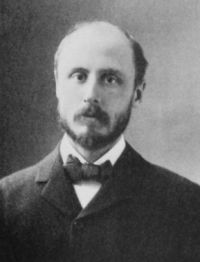 Charles Sears BaldwinBaldassarre CastiglioneOlave M. PotterM. Beresford Ryley
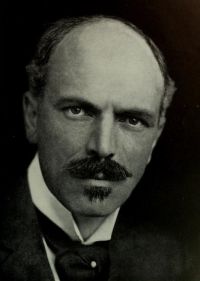 Maurice HewlettLuigi LanziKazimierz WaliszewskiJohn R. EffingerW. W. GregWilliam Dean HowellsMary Wollstonecraft Shelley
 Elizabeth W. ChampneyImbert de Saint-Amand