Baloch people

Definition and stakes

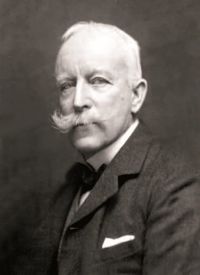
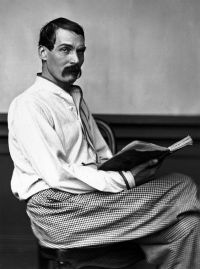
Portrait of Sir Richard Francis Burton Sir Richard Francis Burton,  The Lake Regions of Central Africa…

“ After the fashion of a certain sort of fools, he applies the whole of his modicum of wit to mischief-making, and he succeeds admirably where better men, whose thoughts attempt a wider range, would fail. By his exertions the Baloch became, in point of social intercourse, not unlike the passengers of a ship bound on a long voyage: after the first month the society divides itself into two separate and adverse cliques ”
Source: Gutenberg

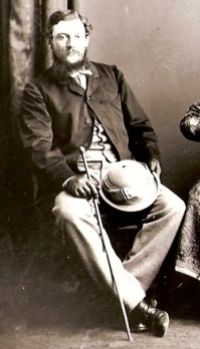
Portrait of Henry Walter Bellew Henry Walter Bellew,  From the Indus to the Tigris (1874)

“ Its inhabitants are a very mixed community. In the southern districts they are mostly Ilyats, from different stocks, with some Persians settled in the principal towns, and all under the rule of local chiefs of Arab descent. In the central districts,—Tún, Tabbas, and northern parts of Ghazn,—there are many Baloch and Tartar families mixed up with the general population. To the north of these, in Záwah and Bákharz, the people are mostly Karai Tartars and Hazárah Uzbaks; and in the northern districts, Nishabor, Sabzwár, Burdjnurd, Khabúshán, &c., they are entirely Kurds. ”
Source: Gutenberg

Portrait of Sir Richard Francis Burton Sir Richard Francis Burton,  The Lake Regions of Central Africa…

“ In the “garrison-towns” the soldiers and their families form the principal part of the population. These men, who call themselves Baloch, are, with few exceptions, originally from Mekran, and from the lowlands about Guadel. Many of them have been born and bred in Arabia. In former days their fathers migrated from their starving homes to Maskat, in the Arab dows which visited their ports, to buy horses, and to collect little cargoes of wheat and salt. In Arabia they were fakirs, sailors, porters, and day-labourers, barbers, date-gleaners, asinegos, beggars, and thieves. ”
Source: Gutenberg

Get perspective with Kwize: daily news enlightened by great literature