Dravidians

Definition and stakes

Portrait of A. L. Kroeber A. L. Kroeber,  Anthropology (1923)

“ The Dravidians, perhaps because they were the more advanced and populous, were able to accept the intrusive culture and yet maintain themselves, whereas the Kolarians either preserved themselves by resisting civilization or had their speech and identity absorbed by it. When the Dravidians first begin to creep into history, shortly before the Christian era, they already possess cities, kingdoms, commerce, writing, and philosophy. They have on the whole contributed less to Indian civilization than the Indo-Europeans: its center always lay in the north ”
Source: Gutenberg

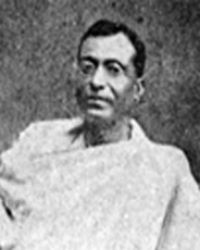
Portrait of Bijay Chandra Majumdar Bijay Chandra Majumdar,  The History of the Bengali Language (1920)

“ How the Dravidian people could influence the speakers of the Aryan speeches in dim past, should be a subject of special research. Many ethnological problems, relating to the Dravidians, have not yet been solved. The ethnologists of our time agree in the main, that the Dravidians have been autochthonous in India; even though this proposition is not free from doubts and difficulties, the situation of the Dravidians in India as neighbours of the Aryans, since the earliest time of Aryan activities, cannot be denied. ”
Source: Wikisource

Sir Clements R. Markham,  Travels in Peru and India

“ It is tolerably certain that the Dravidian races had attained to some degree of civilization before the Aryans appeared in their country, and, with a system of castes, introduced the worship of Vishnu and Siva. One evidence of the ancient civilization of the Dravidians is that they possessed a system of numerals up to 1000, essentially the same in all the four languages; though in counting above 1000 they make use of Sanscrit numerals. ”
Source: Gutenberg

Get perspective with Kwize: daily news enlightened by great literature