Telugu

Definition and stakes

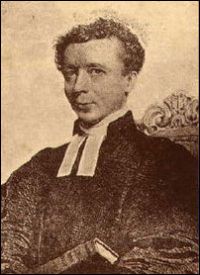
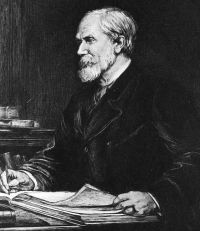
Portrait of Charles Philip Brown Charles Philip Brown,  A Grammar of the Telugu Language (1840)

“ A familiarity with the spoken Telugu as already alluded to, gives so little aid in reading the superior language used in poems, that some have hence imagined the latter to be obsolete: just as the Telugus, Canarese or Tamils, however fluent in colloquial English, are unable to read English poems; which we look upon as perfectly easy. And yet their poets are read with delight by persons of ordinary education: a fact which led me to the conclusion that the “high or Sanscrit dialect” was neither obsolete nor in general pedantic. ”
Source: Wikisource

Portrait of Charles Philip Brown Charles Philip Brown,  A Grammar of the Telugu Language (1840)

“ The words are Sanscrit: but in some Telugu words the letter ఁ called the half sunna, or semicircle is used by some grammarians, but in common use the circle alone is used: though it sometimes is pronounced full N as in the English word son, and elsewhere as half N as in the French word son.
In the ancient pronunciation of Telugu, which the rustic and uncultivated classes still retain, the nasal sound was very prevalent in Telugu: as it is to this day among the rural population of England. But in each country the educated classes have laid aside this disagreeable accent.
”
Source: Wikisource

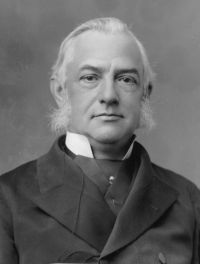
1911 Encyclopædia Britannica, Volume 26… (1911)

“ The Telugu-speaking peoples are partly subjects of the nizam of Hyderabad and partly under British rule, beginning north of Madras city and extending N.W. to Bellary, where Telugu meets Kanarese, and N.E. to near Orissa. They are taller and fairer than the Tamils, otherwise they are of typical Dravidian features. They are an enterprising people, good farmers and skilful seamen. They formed the greater part of the early Madras or “coast” army, whence sepoys even in Bengal were formerly called telingas. In 1901 the number of speakers of Telugu in all India was nearly twenty one millions. ”
Source: Wikisource

Get perspective with Kwize: daily news enlightened by great literature