Battle of Adrianople

Definition and stakes

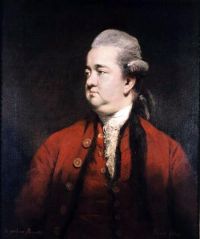
Portrait of Charles Oman Charles Oman,  The Byzantine Empire

“ It was not till forty thousand men had fallen that the thinning of the ranks enabled the survivors to break out and follow their cavalry in a headlong flight. They left behind them, dead on the field, the Emperor, the Grand Masters of the Infantry and Cavalry, the Count of the Palace, and thirty-five commanders of different corps.
The battle of Adrianople was the most fearful defeat suffered by a Roman army since Cannæ, a slaughter to which it is aptly compared by the contemporary historian Ammianus Marcellinus.
”

Source: Gutenberg

William Gordon Holmes,  The Age of Justinian and Theodora…

“ For an interesting exposition of the vicissitudes of warfare by means of cavalry, infantry, and missiles pure, see Oman’s Art of War, but the author’s selection of the battle of Adrianople (378) as marking a sharp turn in the evolution of Roman cavalry is quite arbitrary and could not be historically maintained. That disaster made no demonstrable difference in the constitution of the armies of the Empire. ”
Source: Gutenberg

Hutton Webster,  Early European History

“ In an evil hour for Rome their prayer was granted. At length two hundred thousand Gothic warriors, with their wives and children, found a home on Roman soil.
BATTLE OF ADRIANOPLE, 378 A.D. The settlement of such a host of barbarians within the frontier of the empire was in itself a dangerous thing. The danger was increased by the ill treatment which the immigrants received. The Roman officials robbed them of their possessions, withheld the promised supplies of food, and even tried to murder their leaders at a banquet. Finally, the Germans broke out in open revolt.
”
Source: Gutenberg

Get perspective with Kwize: daily news enlightened by great literature