Benjamin Banneker

Definition and stakes

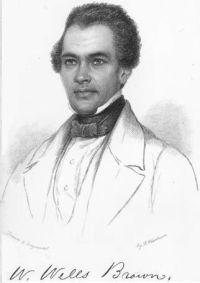
Portrait of William Wells Brown William Wells Brown,  The Black Man: His Antecedents…

“ Banneker believed in the divinity of reason, and in the omnipotence of the human understanding with Liberty for its handmaid. The intellect impregnated by science and multiplied by time, it appeared to him, must triumph necessarily over all the resistance of matter. He had faith in liberty, truth, and virtue. His remains still rest in the slave state where he lived and died, with no stone to mark the spot or tell that it is the grave of Benjamin Banneker. ”
Source: Gutenberg

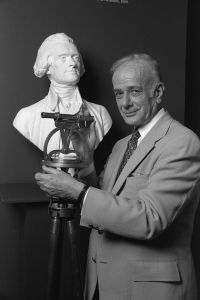
Portrait of Silvio A. Bedini Silvio A. Bedini,  Early American Scientific Instruments and Their Makers

“ Benjamin Banneker
A name that is too often ignored in the history of science in colonial America is that of a free Negro, Benjamin Banneker (c. 1734-1806) of Baltimore. A farmer by occupation, Banneker was the son of a native African slave and a free mulatto woman. In his spare time he attended the school of a Quaker farmer; the only book he owned was the Bible. When he was a young man he acquired a watch from a trader, and from it he developed his love of science and instruments.
”
Source: Gutenberg

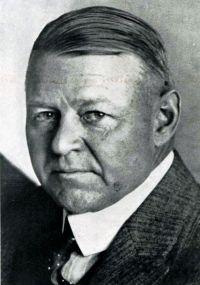
Portrait of Silvio A. Bedini Silvio A. Bedini,  Early American Scientific Instruments and Their Makers

“ Figure 12.—Letter from Benjamin Banneker to George Ellicott dated October 13, 1789, regarding astronomical data for the compilation of Banneker's almanac. Photo courtesy Maryland Historical Society.
Figure 13.—Title page of one of Banneker's almanacs. The portrait of Banneker was made by Timothy Woods in 1793 for the publisher and reproduced by woodcut. Banneker's first almanac was published in Philadelphia in 1792. Joel Baily
Still another 18th-century practitioner was Joel Baily (1732-1797) , a Quaker of West Bradford, Pennsylvania.
”
Source: Gutenberg

Get perspective with Kwize: daily news enlightened by great literature