Berkshire pig

Definition and stakes

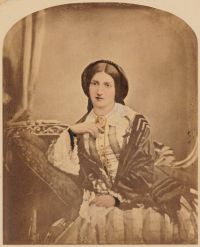
Portrait of Isabella Beeton Isabella Beeton,  Mrs. Beeton's Book of Household Management (1907)

“ The present day pigs are shorter and deeper in the carcass; they have shorter and heavier heads, and are altogether more compactly built; to such a state of this kind of perfection have the breeders brought their pigs, that a well-fattened Berkshire is one of the most successful fat show pigs of the day. A cross between the Berkshires and the Middle Whites is very common and very successful for breeding London porket pigs; the white pig is considered to be more prolific, and the cross-bred pigs grow faster when young than the pure bred Berkshires. ”
Source: Wikisource

William Fream and Robert Wallace,  1911 Encyclopædia Britannica, Volume 21… (1911)

“ It has a moderately short head with heavy jowl, a deep, compact carcase, and wide, low and well-developed hind-quarters, with heavy hams. The skin carries an abundance of fine hair. The Berkshire is an early-maturity breed which has been somewhat inbred, and is not so hardy and prolific as most breeds. The boars cross well with common stock. It merits the most credit in raising the quality of Irish pigs. In America it is in the front rank for numbers and quality as a lard-hog. There it often grows to be a larger and finer animal than it is in England. ”
Source: Wikisource

Mrs. Beeton,  The Book of Household Management

“ THE BERKSHIRE PIG IS THE BEST KNOWN AND MOST ESTEEMED of all our English domestic breeds, and so highly is it regarded, that even the varieties of the stock are in as great estimation as the parent breed itself. The characteristics of the Berkshire hog are that it has a tawny colour, spotted with black, large ears hanging over the eyes, a thick, close, and well-made body, legs short and small in the bone; feeds up to a great weight, fattens quickly, and is good either for pork or bacon. ”
Source: Gutenberg

Get perspective with Kwize: daily news enlightened by great literature