“ Anti-fat Diet.—There is inconceivable folly in the fear of fatness. We do not for a moment deny that it is possible the organism may be too heavily packed with adipose tissue, and that the action of its several parts may be hampered by this encumbrance, while, as a whole, it is needlessly burdened ”
Fatness
Definition and stakes
The theme of “fatness” has been addressed by authors such as J. F. Clymer, Nina Wilcox Putnam and Herbert Spencer. It is often associated with terms like fat, obesity, body, tissue and weight.
Quotes about “fatness”
“ In some cases there is a disposition of too much fatty matter in the system; and many people suppose that fatness is a sign of healthfulness, which is false. No one needs any more fat on his body than is essential to form cushions for his tendons and muscles; if too much, there is a depletion of strength. ”
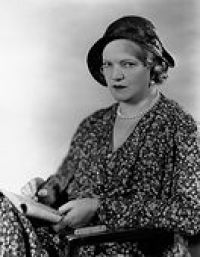 Nina Wilcox Putnam,
The Fattening Calf
(1920)
Nina Wilcox Putnam,
The Fattening Calf
(1920)
“ Of course as far as I could see it was Nature's method to put on flesh instead of taking it off, at least in most cases. For most of us are born fat, lots acquire fatness, and some say they try to thrust fatness upon themselves. ”
 Herbert Spencer,
The Principles of Biology, Volume 2…
(1899)
Herbert Spencer,
The Principles of Biology, Volume 2…
(1899)
“ When fatness arises in the prime of life, whether from peculiarity of food or other circumstance, it is not the sign of an increased total vitality. On the contrary, if great muscular action has to be gone through, the fat must be got rid of ”
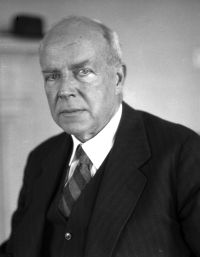 Samuel G. Blythe,
The Fun of Getting Thin: How to Be Happy and Reduce the Waist Line
Samuel G. Blythe,
The Fun of Getting Thin: How to Be Happy and Reduce the Waist Line
“ This time, instead of skirmishing valiantly for a space and then being ignominiously and fatly routed by the powerful forces of food and drink, I hung stolidly to the line of my original attack, harassed the enemy by a constant and deadly fire—and one morning discovered I had the foe on the run.It always makes me laugh to hear people talk about losing flesh—unless, of course, the decrease in weight is due to illness. No healthy person, predisposed to fat, ever lost any flesh. If that person gets rid of any weight, or girth, or fat, it isn't lost—it is fought off, beaten off. ”
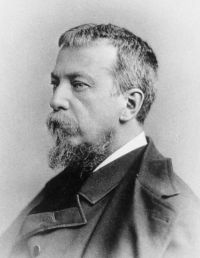 S. Weir Mitchell,
Fat and Blood
S. Weir Mitchell,
Fat and Blood
“ Some gain in flesh as life goes on is a frequent thing here as elsewhere, and usually has no unwholesome meaning. Occasionally we see people past the age of sixty suddenly taking on fat and becoming at once unwieldy and feeble, the fat collecting in masses about the belly and around the joints. Such an increase is sometimes accompanied with fatty degeneration of the heart and muscles, and with a certain watery flabbiness in the limbs, which, however, do not pit on pressure. ”
The Postum Cereal Company, The Road to Wellville — Our Daily Food Requirements (1926)
“ Thin persons need more food in proportion to their weights than fat ones. In order to lose weight, the body must be driven to consume its own fat. To take care of the internal work of the body, breathing, heart-beating, digestion, involuntary pull of the muscles, and for the multiplied activities of the cells, each hour during the twenty-four we must have a certain number of calories as our basal requirement. ”
S. Weir Mitchell,
Fat and Blood
“ Men, as a rule, preserve their nutritive status more equably than women. Every physician must have been struck with this. In fact, many women lose or acquire large amounts of adipose matter without any corresponding loss or gain in vigor, and this fact perhaps is related in some way to the enormous outside demands made by their peculiar physiological processes. Such gain in weight is a common accompaniment of child-bearing, while nursing in some women involves considerable gain in flesh, and in a larger number enormous falling away, and its cessation as speedy a renewal of fat. ”
 Xavier Bichat,
General Anatomy, Applied to Physiology and Medicine…
Xavier Bichat,
General Anatomy, Applied to Physiology and Medicine…
“ It is necessary to distinguish carefully the size of the body which arises from cellular fat, from that which is the consequence of the proper development and nutrition of the organs. 3d. Oftentimes the causes which evidently weaken the powers of life, produce a considerable quantity of fat; such as inactivity, rest, great and long continued hemorrhage, convalescence from certain acute diseases, in which the powers still languish, though fat abounds. 4th. A fatty state of the muscles is a state of evident weakness in them. ”
Sir Charles Alexander Cameron, The Stock-Feeder's Manual
“ It is an important point in the composition of oil-cakes, that they contain a large proportion of ready-formed fatty matters [191] which can, with but little alteration, be at once transmuted into animal fat. There are some individuals of the genus Homo to whose stomachs fat, per se, is intolerable; nevertheless, as a general rule, fatty substances exercise a favorable influence in the process of digestion, and, either in a separate state, or intimately commingled with other aliments, constitute a large proportion of the food of man. ”
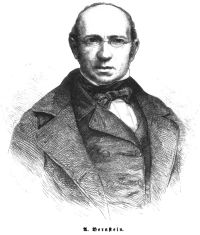 Aaron David Bernstein,
Popular Books on Natural Science
Aaron David Bernstein,
Popular Books on Natural Science
“ Thence it comes that lean persons eat much, while we often are astonished to see how little food is taken by fat people. The lean one has no fat to meet the drain produced by perspiration and respiration; he breathes and perspires accordingly at the expense of his flesh, and, therefore, is obliged to continually take in a fresh supply of food. The fat person, meanwhile, does not live on his capital, [Pg 123] the flesh and the blood, but on his supply of fat ”
Fairfax T. Proudfit, Dietetics for Nurses
“ Weight for weight, fat furnishes twice as much heat as the carbohydrates, and in bulk the difference is even more striking; for example (about) two tablespoonfuls of sugar are required to produce 100 calories, whereas one scant tablespoonful of olive oil will produce a like number of heat units. As a source of supply for reserve energy in the body, fat is most valuable. This reserve fuel is stored in the form of adipose tissues underlying the skin and surrounding the vital organs, lending contour to the form and protecting the organs from jars and shocks. ”
 Horace Fletcher,
The A.B.-Z. of our own nutrition
Horace Fletcher,
The A.B.-Z. of our own nutrition
“ There is no struggle in this case between the several food constituents, and therefore no one of them suffers. In harmony also with daily experience the physician, in cases of weakness of the stomach, totally excludes fatty food and recommends meat of a fat-free kind; for example, game, etc. In pathological cases, however, where an excessive activity of the gastric glands is manifested, fatty food, or fat as emulsion, is prescribed. And here medicine has empirically brought to its aid the restraining action of fat, which we have so strikingly seen in our experiments. ”
S. Weir Mitchell,
Fat and Blood
“ The loss of fat which is not due to change of diet or to exercise, especially its rapid or steady loss, nearly always goes along with conditions which impoverish the blood, and, on the other hand, the gain of fat up to a certain point seems to go hand in hand with a rise in all other essentials of health, and notably with an improvement in the color and amount of the red corpuscles. ”
 Elsie Lincoln Benedict,
How to Analyze People on Sight
Elsie Lincoln Benedict,
How to Analyze People on Sight
“ The Fat, Overweight Individual¶ Soft flesh thickly padded over a small-boned body distinguishes the pure Alimentive type. In men of this type the largest part of the body is around the girth; in women it is around the hips. These always indicate a large nutritive system in good working order. Fat is only surplus tissue—the amount manufactured by the assimilative system over and above the needs of the body. ”
 Fannie Farmer,
Boston Cooking-School Cook Book
(1918)
Fannie Farmer,
Boston Cooking-School Cook Book
(1918)
“ Fat is the white or yellowish oily solid substance forming the chief part of the adipose tissue. Fat is found in thick layers directly under the skin, in other parts of the body, in bone, and is intermingled throughout the flesh. Fat as food is a great heat giver and force-producer. ”
1911 Encyclopædia Britannica, Volume 20… (1911)
“ Adiposity or obesity occurs when we have an excessive amount of fat stored in the normal connective-tissue areas of adipose tissue. It may be caused by various conditions, e.g. over nutrition with lack of muscular energy, beer-drinking, castration, lactation, disturbed metabolism, some forms of insanity, and may follow on some fevers. ”
“ Fats.—Many people who come to their physicians complaining of habitual constipation have been told, or have read, that fat is rather indigestible, and, as a consequence, they have eliminated from their dietary all fatty materials. Even butter they use but sparingly, and they exchange the cream in their tea or coffee for plain milk; they carefully remove as much as possible of the fat of meat and they abstain from all sauces in which fat is employed. Such practices make normal, natural, regular evacuations of the bowels extremely difficult. ”
A system of practical medicine…
“ Fatty Metamorphosis, Fatty Degeneration, and Fatty Infiltration.The fat which is present within the body under physiological conditions owes its origin primarily to the food taken. A diet which is abundantly fatty furnishes a direct source for much of the fat which appears accumulated in the various organs and tissues. ”
 Lewis Carroll,
Feeding the Mind
(September 2017)
Lewis Carroll,
Feeding the Mind
(September 2017)
“ I have heard a physician telling his patient—whose complaint was merely gluttony and want of exercise—that 'the earliest symptom of hyper-nutrition is a deposition of adipose tissue,' and no doubt the fine long words greatly consoled the poor man under his increasing load of fat. ”
S. Weir Mitchell,
Fat and Blood
“ The exact relations of fatty tissue to the states of health are not as yet well understood; but, since on great exertion or prolonged mental or moral strain or in low fevers we lose fat rapidly, it may be taken for granted that each individual should possess a certain surplus of this readily-lost material. It is the one portion of our body which comes and goes in large amount. ”
 William Jay Youmans,
Popular Science Monthly
(1872)
William Jay Youmans,
Popular Science Monthly
(1872)
“ Independently of its importance as a non-conducting substance in impeding the too rapid escape of animal heat, fat may also be regarded as a store of material to compensate for waste of tissue, under sickness, or other circumstances, entailing temporary abstinence from food. But when fat accumulates to the extent of interfering with important functions, and becomes a load and a drag, impeding the respiratory movements, making exercise painful, and dulling the sensibilities, it is then not only a source of great discomfort, but the precursor of positive disease. ”
Robert Jennings, Cattle and Their Diseases
“ Where there is the most fat, there is the best lean; where there is the greatest amount of muscle, without its share of fat, that part is accounted inferior, and is used for a different purpose; in fact, so far from fat's being a disease, it is a condition of muscle, necessary to its utility as food,—a source of luxury to the rich, and of comfort to the poor, furnishing a nourishing and healthy diet for their families. ”
S. Weir Mitchell,
Fat and Blood
“ There is a popular idea, which has probably passed from the agriculturist into the common mind of the community, to the effect that human fat varies,—that some fat is wholesome and some unwholesome, that there are good fats and bad fats. I remember well an old nurse who assured me when I was a student that "some fats is fast and some is fickle, but cod-oil fat is easy squandered." ”
S. Weir Mitchell,
Fat and Blood
“ Loss of flesh has also a collateral value of great import, because it is almost an invariable rule that rapid thinning is accompanied soon or late with more or less anæmia, and it is uncommon to see a person steadily gaining fat after any pathological reduction of weight without a corresponding gain in amount and quality of blood. We too rarely reflect that the blood thins with the decrease of the tissues and enriches as they increase. ”
Eugene Christian, Encyclopedia of Diet: A Treatise on the Food Question…
“ Obesity caused by overeatingIn every case of obesity, one or more of these causes are present. If one is blessed with good digestion and good assimilation, or, in other words, if all the nutriment taken into the body is absorbed into the tissues, then the quantity must be regulated by one's work or labor, otherwise any excess of fat-producing food is stored up by provident Nature, contemplating future use; and if it is not used, by actual work, the result is a gradual accumulation of fatty tissue. ”
S. Weir Mitchell,
Fat and Blood
“ Looking back over the whole subject, it will be well for the physician to remember that increase of fat, to be a wholesome condition, should be accompanied by gain in quantity and quality of blood, and that while increase of flesh after illness is desirable, and a good test of successful recovery, it should always go along with improvement in color. Obesity with thin blood is one of the most unmanageable conditions I know of. ”
Ernest G. Martin, Physiology: The Science of the Body
“ This fact is taken advantage of in treatment for reducing flesh; where one lays on flesh it is evident that more food has been taken than was required for metabolism so that the surplus has been stored in the form of fat. The only way to reduce the weight is to compel the body to burn up that stored fat. ”
 Euphemia Vale Blake,
Popular Science Monthly
(1880)
Euphemia Vale Blake,
Popular Science Monthly
(1880)
“ FROM the days of Hippocrates, intelligent medical observers have noticed that an unusual accumulation of fat, far from adding to the strength of a person, was a source of physical weakness, and, to a certain extent, an outward sign of incapacity; that it limited activity and shortened life. It is only in comparatively modern times that scientific experimentalists have ascertained precisely how the system generally, and the heart particularly, is affected either by the overloading or infiltration of superfluous fatty matter upon or in its muscular substance. ”
Samuel G. Blythe,
The Fun of Getting Thin: How to Be Happy and Reduce the Waist Line
“ You know all this fat is caused by an excess of food and drink, and you know it can be taken off by a reduction in those fatmakers. Are you going to stick round here so fat you are a joke, uncomfortable, miserable when it's hot, in your own way and in the way of everybody else, when, if you've got the will-power of a chickadee, you can get back to reasonable proportions and comfort merely by denying yourself things you do not need? ”
 Rasmus Larssen Alsaker,
Maintaining Health (Formerly Health and Efficiency…
Rasmus Larssen Alsaker,
Maintaining Health (Formerly Health and Efficiency…
“ Taken in moderation they are easily digested, but if taken in excess they become a burden to the system. About 7 or 8 per cent of the weight of a normal body is fat, and this fat is formed chiefly from the fatty foods taken into the system, supplemented by the sugar and starch.When the body becomes very fat, it is a disease, called obesity. Fat people are never healthy. The fat usurps the place that should be occupied by normal tissues and organs. It crowds the heart and the lungs, and even replaces the muscle cells in the heart. ”
C. E. Page, The Natural Cure of Consumption…
“ Exercise in the open air favors the excretion of waste matters which otherwise would be deposited in the cellular tissues. The fatty degeneration so much admired in infancy, aids in the production of emaciation and consumption at adult age.A fat person, at whatever period of life, has not a sound tissue in his body; not only is the entire muscular system degenerated with the fatty particles, [54] 149 but the vital organs—heart, lungs, brain, kidneys, liver, etc.—are likewise mottled throughout, like rust spots in a steel watch-spring, liable to fail at any moment. ”
w:Sushruta, Sushruta Samhita, Volume 1 (1907)
“ It strengthens the eyesight and increases the energy of the body, improves its power of digestion and heightens its glow and complexion. Fat is deranged by such acts as, an abuse of astringent, bitter, cold, parchifying or Vistambhi (indigestible food which remains stuffed in the stomach) substances, a voluntary repression of the natural urging for evacutions of the body, by excessive sexual indulgence, and fatiguing physical exercise, or by the draining action of any particular disease. ”
S. Weir Mitchell,
Fat and Blood
“ It is not at all unlikely that such is the case, and that, for example, the fat of an obese anæmic person may differ from that of a fat and florid person. The flabby, relaxed state of many fat people is possibly due not alone to peculiarities of the fat, but also to want of tone and tension in the areolar tissues, which, from all that we now know of them, may be capable of undergoing changes as marked as those of muscles. ”
Adelaide Hoodless, Public School Domestic Science
“ Fats and oils are but little changed during digestion. The fat is divided into little globules by the action of the pancreatic juice and other digestive elements, and is absorbed by the system. Fat forms the chief material in adipose tissue, a fatty layer lying beneath the skin, which keeps the warmth in the body, and is re-absorbed into the blood, keeping up heat and activity, and preserving other tissues during abstinence from food. ”
