Bignoniaceae

Definition and stakes

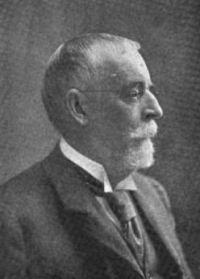
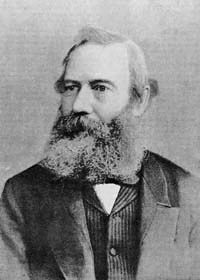
Portrait of Charles Darwin Charles Darwin,  On the movements and habits of climbing plants (1865)

“ The species to be described belong to ten families, and will be given in the following order:—Bignoniaceæ, Polemoniaceæ, Leguminosæ, Compositæ, Smilaceæ, Fumariaceæ, Cucurbitaceæ, Vitaceæ, Sapindaceæ, Passifloraceæ.
Bignoniaceæ.—This family contains many tendril-bearers, some twiners, and some root-climbers. The tendrils are always modified leaves. Nine species of Bignonia, selected by hazard, are here described, in order to show what diversity of structure and action there may be in species of the same genus, and to show how remarkable the action of the tendrils may be in some cases.
”
Source: Wikisource

Portrait of Charles Darwin Charles Darwin,  On the movements and habits of climbing plants (1865)

“ We have seen that such disks are formed by two species of Bignonia, by the Ampelopsis, and, according to Naudin [11] , by the Cucurbitaceous genus Peponopsis adhærens. Their development, apparently in all cases, depends on the stimulus from contact. It is not a little singular that three families so widely distinct as the Bignoniaceæ, Vitaceæ, and Cucurbitaceæ should all have species bearing tendrils with this same remarkable peculiarity. Most tendrils, after they have clasped any object, rapidly increase in strength and thickness throughout their whole length ”
Source: Wikisource

active 1799-1828 Henry Cranke Andrews,  The botanist's repository for new and rare plants… (1797)

“ Seed-bud and pointal.
This superb Bignonia is well characterized by the specific appellation of grandiflora; and although, in several genera, this title has been rendered nugatory by the introduction afterwards of still larger flowering species, yet we think it is not likely to be the case in the present instance. In Kæmpfer’s Icones there is a tolerably good figure of this fine plant. It flowers in the autumn, and great hopes are entertained that it will ultimately prove to be of a hardy character, when a fair trial of it is made, with its scarcity has hitherto prevented.
”
Source: Gutenberg

Get perspective with Kwize: daily news enlightened by great literature