“ Nevertheless they survive surprisingly everywhere, looking out among the feet of the roses, flaunting over the forget-me-nots, unexpected in a box of seedling [105] asters. Now if I were going to recognize social distinctions in the garden, which I am not, I should call the good petunia a person unmistakably middle-class. Whether it is this incapacity of hers to see a snub, or her very full skirt, or her very high colour, the petunia always seems to me a bourgeoise little lady in her Sunday best, with her hair smooth and her temper well kept under for the occasion. ”
Petunia
Definition and stakes
The petunia, a vibrant flowering plant, has fascinated writers and horticulturists alike for its adaptability and aesthetic charm. From Mrs. M. D. Wellcome’s descriptions of its hybridization to Charles Darwin’s detailed investigations into its reproductive mechanisms, the petunia appears both as a botanical subject and a cultural icon. Ida D.
Bennett discusses the difficulties of its cultivation, while literary mentions, such as the metaphor of its “middle-class” character, illustrate its widespread presence in gardens and stories. These varied viewpoints highlight the petunia’s dual identity as a scientific subject and a familiar, albeit sometimes controversial, element of the garden.
Quotes about “petunia”
Mrs. M. D. Wellcome, Talks About Flowers
“ In nothing, perhaps, has there been such a wonderful improvement by culture and hybridising as the Petunia. Mr. Vick tells us how that half a century ago, he saw for the first time, a Petunia. It was a novelty—a strange flower from a flowery land, South America, and it was carefully treated in green-houses. ”
Ida D. Bennett, The Flower Garden
“ No variety of Petunia can be depended upon when grown in a mixed bed. A particularly fine variety may be lifted and planted on the opposite side of the house, either in the ground or in a window-box, or in a pot in the house. From one exceedingly fine specimen of the large ruffled variety, lifted and grown in a window-box on the opposite side of the house from the Petunia bed, I saved a single pod of seed from which I grew, the following year, sufficient plants for a large bed. ”
“ One cannot, after all, encourage class feeling in the garden; there every one must stand on his own roots, and take his share of salts and carbon dioxide without precedence, and the hollyhocks in my garden receive as much consideration as anybody.Petunias are up all over the place, purple and white and striped. I knew by experience that we could have too many petunias on this shelf, so whenever a vague, young pushing thing disclosed itself to be a petunia, as it nearly always did, I requested Atma to pull it up. ”
Mrs. Loudon,
Botany for Ladies
“ This purple Petunia has consequently puzzled botanists as much as some of the other plants I have had occasion to mention; and it has been called successively Petunia violacea, Salpiglossis integrifolia, Nierembergia phœnicea, and Petunia phœnicea. ”
Various, Popular Science Monthly (1890)
“ Just why we should have this peculiar form of prolification, or any, in fact, is not for us to decide. The ordinary forces which would construct a normal flower have been thrown into confusion, and retrograde metamorphoses and floral prolification have resulted. In fact, it seems evident that out of the substance ordinarily producing a capsule of petunia-seed has been formed in the same ovary an amalgamation of stamens, petals, and a rudimentary pistil. In short, the tendency to petaline display does not stop with the stamens, but invades the pistil, and transforms it as already described. ”
L. H. Bailey,
Manual of Gardening (Second Edition…
“ Excepting the petunia, no plant will give the profusion of bloom with as little care as the annual phlox (Phlox Drummondii) . For clear and brilliant colors, the many varieties of this are certainly unrivaled. The dwarf kinds are the more desirable for ribbon-beds, as they are not so “leggy.” There are whites, pinks, reds, and variegated of the most dazzling brilliancy. The dwarfs grow ten inches high, and bloom continuously. Set them 8 inches apart in good soil. Seed may be sown in the open ground in May, or for early plants, in the hotbed in March. ”
Eleanor H. Porter,
The Sunbridge Girls at Six Star Ranch
“ They do unearth 'em, and 'twas such a nice rhyme for nasturtium. Now there's petunia; I think that's a perfectly beautiful sounding word, but I've never been able to find a single thing that rhymed with it. I do love flowers so," she added, after a moment; "but we've never had many. They always burn up, or dry up, or get eaten up, or just don't come up at all. Of course we've never had a really pretty place. Ministers like us don't, you know," she finished cheerfully.There was no reply to this. Not one of the Happy Hexagons could think of anything to say. ”
Charles Darwin,
The Effects of Cross & Self-Fertilisation in the Vegetable Kingdom
“ Nolana prostrata: 5 : 12.75 : 5 : 13.40 : 105. Petunia violacea—first generation: 5 : 30.80 : 5 : 26.00 : 84. Petunia violacea—second generation: 4 : 40.50 : 6 : 26.25 : 65. Petunia violacea—third generation: 8 : 40.96 : 8 : 53.87 : 131. Petunia violacea—fourth generation: 15 : 46.79 : 14 : 32.39 : 69. Petunia violacea—fourth generation, from a distinct parent: 13 : 44.74 : 13 : 26.87 : 60. ”
Mrs. M. D. Wellcome, Talks About Flowers
“ There are the German Hybrids, the Italian stripes, and the Drummondii from Texas. Every year brings its novelties, as with other flowers. Mr. C. E. Allen, who makes a specialty of seedling Verbenas, is sending out several fine ones this season; Silver Queen, Florence, Emma, Carroll, Ralph and Variegata are very attractive according to the descriptions. PETUNIAS.Few things in the garden will make more show throughout the entire season, even after quite severe frosts, than a bed of Petunias from a paper of seed marked "Choicest Mixed from Show Flowers." ”
William Jackson Hooker,
Curtis's Botanical Magazine, Volume 73…
“ Petiole as long as the leaf, slender. From the axil of the leaf or petiole, a solitary peduncle appears, about as long as, or longer than, the petiole, in our plant bearing one flower, with an articulation, and two small bracts, not unfrequently two or even three flowers : the upper joint or pedicel slightly incrassated upwards, about three quarters of an inch long. Calyx of five lanceolate, acuminated sepals, slightly hairy at the back, the apices more or less spreading. Corolla with the tube funnel-shaped, white below, rose-purple above ”
George Borrow,
Lavengro: The Scholar, the Gypsy…
“ Petulengro say that to be cast into the earth is the natural end of man.’ ‘Who is Mr. Petulengro?’ said Peter, interrupting his wife, as she was about to speak. ‘Master of the horse-shoe,’ said I; ‘and, according to his own account, king of Egypt.’ ‘I understand,’ said Peter, ‘head of some family of wandering Egyptians—they are a race utterly godless. Art thou of them?—but no, thou art not, thou hast not their yellow blood. ”
Harold Edgeworth Butler, Post-Augustan Poetry From Seneca to Juvenal
“ If this is not great poetry, it is at least one of the most perfect specimens of conventional erotic verse in all ancient literature. If we except a very few of the best poems of Propertius, Latin Elegiacs have nothing to show that combines such perfection of form with such exquisite sensuous charm. It breathes the fragrance of the Greek anthology.The general impression left by the poetical work of Petronius is curiously unlike that left by any Latin poet. Sometimes dull, he is never eccentric; without the originality of the greatest artists, he has all the artist's sensibility for form. ”
George Borrow,
The Pocket George Borrow
“ Petulengro, fixed her large blue eyes full upon his wife. Both these females were very handsome—but how unlike! Belle fair, with blue eyes and flaxen hair; Mrs. Petulengro with olive complexion, eyes black, and hair dark—as dark as could be. Belle, in demeanour calm and proud; the gypsy graceful, but full of movement and agitation. And then how different were those two in stature! The head of the Romany rawnie scarcely ascended to the breast of Isopel Berners. I could see that Mrs. Petulengro gazed on Belle with unmixed admiration; so did her husband. ”
George Borrow,
The Romany Rye
(1857)
“ Petulengro, “I have braided your hair in our fashion: you look very beautiful, madam; more beautiful, if possible, than before.” Belle now rose, and came forward with her tire-woman. Mr. Petulengro was loud in his applause, but I said nothing, for I did not think Belle was improved in appearance by having submitted to the ministry of Mrs. Petulengro’s hand. Nature never intended Belle to appear as a gypsy ”
“ The petals were moulded in the hollow of the hand with the head of a pin after being coloured, and curled over where desirable, with the steel part wetted like the scissors. The wire stalk was covered by a narrow strip of green wax neatly rolled and rubbed smooth, crooked over at the top and a sort of little wax centre formed on this crook on which the flower was literally built petal by petal. Experience taught which flowers were feasible and which were not. Roses usually turned out well, so did scarlet japonica, apple blossom, snowdrops, and daffodils. ”
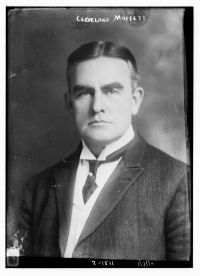
Cleveland Moffett,
The Bishop's purse
(1912)
“ She was a great friend of Horatio's, this strange little maid with gold-red hair and questioning deep-set eyes and that odd smile. Many were the walks and talks they had together, Petronia holding on by the curate's forefinger, asking questions. Such questions! How many buttercups full of rain can a mouse drink? Telling him tremendous secrets and confiding to him all her troubles, what mountains of troubles! And yet Merle had never heard Petronia cry, not even the time when she was bitten by the frightened squirrel, whose foot she freed from the weasel trap, did An Petronia cry. ”
Dorothy Canfield Fisher,
The Brimming Cup
“ All this came and went in an instant, for she now saw that one big, shining petal was slowly, slowly, but quite visibly uncurling at the tip. From that moment on, she saw nothing, felt nothing but the opening flower, lived only in the incredibly leisurely, masterful motion with which the grotesquely shaped protecting petals curled themselves back from the center. ”
Fredrika Bremer,
The Home; Or, Life in Sweden
“ But, ah! neither Petrea's great prowess, nor her great plans; neither the social theatre, nor the pilgrimage to Jerusalem, least of all the thee-and-thou friendship, availed anything towards enlivening the churlish young girl. Petrea saw plainly that an invitation to dance would avail more than all her propositions, so, sighing deeply because she was not a man to offer so great a pleasure, she rose up, and left the object of her vain endeavours. ”
Clayton Mackenzie Legge, Highland Mary: The Romance of a Poet
“ As the last snowy petal left its stem, leaving it looking so bare and pitiful nestling in among the leaves as though ashamed of its nakedness, a hard sob of anguish escaped his lips, for it seemed as if each petal contained a part of the soul of his loved one, and leaning his face against the sash, he [380] gave himself up to the crushing sorrow that submerged his soul and plunged him once more into black despair. ”
Various, Encyclopaedia Britannica, 11th Edition…
“ A petal often consists of two portions—the lower narrow, resembling the petiole of a leaf, and called the unguis or claw; the upper broader, like the blade of a leaf, and called the lamina or limb. These parts are seen in the petals of the wallflower (fig. 54) . The claw is often wanting, as in the crowfoot (fig. 55) and the poppy, and the petals are then sessile. According to the development of veins and the growth of cellular tissue, petals present varieties similar to those of leaves. Thus the margin is either entire or divided into lobes or teeth. ”
The German Classics of the Nineteenth and Twentieth Centuries…
“ Penthesilea is a work apart. Passionate, headlong, almost savage, is the character of the queen of the Amazons, yet wonderfully sweet in its gentler moods and glorified with the golden glow of high poetry. Nothing could be further removed from the pseudo-classical manner of the eighteenth century than this modern and individual interpretation of the old mythical story of Penthesilea and Achilles, between whom love breaks forth in the midst of mortal combat. ”
Various, Graham's Magazine, Vol. XIX, No…
“ Penthesilea, virgin queen of the man-defying virgins—fairest of earth’s fair daughters—had left her boundless plains beside the cold Thermodon—had called her quivered heroines from warring with the mountain pard, and chasing the huge urus of the plain, to launch the unerring shaft and ply the two-edged axe against the sevenfold shield of Salamis, against the Pelian spear. ”
Philip Schaff,
Nicene and Post-Nicene Fathers…
(1885)
“ Tradition also tells us of a daughter, St. Petronilla. She is first called St. Peter’s daughter in the Apocryphal Acts of SS. Nereus and Achilles, which give a legendary account of her life and death. In the Christian cemetery of Flavia Domitilla was buried an Aurelia Petronilla filia dulcissima, and Petronilla being taken as a diminutive of Petrus, she was assumed to have been a daughter of Peter. ”
Charles Lamb and Mary Lamb, Tales from Shakspeare — The Taming of the Shrew (1831)
“ Petruchio mounted his wife upon a miserable horse, lean and lank, which he had picked out for the purpose, and himself and his servant no better mounted; they journeyed on through rough and miry ways, and ever when this horse of Katherine's stumbled, he would storm and swear at the poor jaded beast, who could scarce crawl under his burthen, as if he had been the most passionate man alive. ”
O. Henry,
The Voice of the City
(1908)
“ On the morrow, I dragged him to an editor. The great man read, and, rising, gave Pettit his hand. That was a decoration, a wreath of bay, and a guarantee of rent. And then old Pettit smiled slowly. I call him Gentleman Pettit now to myself. It’s a miserable name to give a man, but it sounds better than it looks in print. “I see,” said old Pettit, as he took up his story and began tearing it into small strips. “I see the game now. You can’t write with ink, and you can’t write with your own heart’s blood, but you can write with the heart’s blood of some one else. ”
1911 Encyclopædia Britannica, Volume 21… (1911)
“ His mother Agave having joined the revellers on Mount Cithaeron, Pentheus followed and climbed a lofty pine to watch the proceedings. Being discovered he was torn to pieces by Agave and others, who mistook him for some wild beast. His head was carried back to Thebes in triumph by his mother. Labdacus and Lycurgus, who offered a similar resistance, met with a like fearful end. Some identify Pentheus with Dionysus himself in his character as the god of the vine, torn to pieces by the violence of winter. The fate of Pentheus was the subject of lost tragedies by Thespis and Pacuvius. ”
Rodolfo Amedeo Lanciani,
Pagan and Christian Rome
“ There is no doubt that Petronilla was buried in close proximity to this cubiculum. The story of her relationship to S. Peter has no foundation whatever; it rests on an etymological mistake, by which the name Petronilla is treated as a diminutive of Petrus, as is Plautilla of Plautius or Plautia, and Domitilla of Domitius or Domitia. Petrus is not a Latin name; it came into use with the spreading of the gospel, and only in rare and exceptional cases. The young martyr was named after a member of the same Flavian family to which this cemetery belonged, Titus Flavius Petron, an uncle of Vespasian. ”
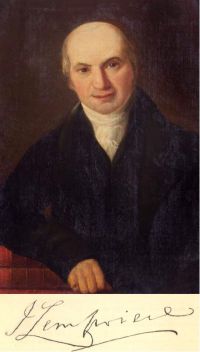
John Lemprière,
A classical dictionary
(1904)
“ There is also the feast of Trimalcion, in which he paints with too much licentiousness the pleasures and the debaucheries of a corrupted court and of an extravagant monarch; reflections on the instability of human life; a poem on the vanity of dreams; another on the education of the Roman youth; two treatises, &c. The best editions of Petronius are those of Burman, 4to, Utrecht, 1709, and Reinesius, 8vo, 1731. Pettius, a friend of Horace, to whom the poet addressed his eleventh epode. ”
Suetonius,
The Lives of the Twelve Caesars…
“ PETRONIUS was a Roman knight, and apparently of considerable fortune. In his youth he seems to have given great application to polite literature, in which he acquired a justness of taste, as well as an elegance of composition. Early initiated in the gaieties (393) of fashionable life, he contracted a habit of voluptuousness which rendered him an accommodating companion to the dissipated and the luxurious. The court of Claudius, entirely governed for some time by Messalina, was then the residence of pleasure; and here Petronius failed not of making a conspicuous appearance. ”
Petronius Arbiter, The Satyricon — Complete
“ At a cost of much labor we have been able to decipher a morsel which we give to the public: and of the authenticity of which there can be no doubt. We render homage to the brave French army to which we owe this acquisition. It is easy to notice that there is a lacuna in that passage of Petronius in which Encolpius is left with Quartilla, looking through a chink in the door, at the actions of Giton and little Pannychis. ”