Bishop of London

Definition and stakes

Various Encyclopaedia Britannica, 11th Edition…

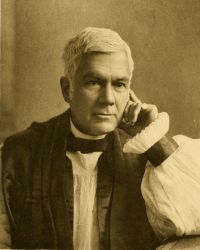
He was the first bishop of London, since the Reformation, to “pontificate” in a mitre as well as the cope, and though no man could have been less essentially “sacerdotal” he was always careful of correct ceremonial usage. His interests and his sympathies, however, extended far beyond the limits of the church. He took a foremost part in almost every good work in his diocese, social or educational, political or religious; while he found time also to cultivate friendly relations with thinking men and women of all schools, and to help all and sundry who came to him for advice and assistance.
Source: Gutenberg

Don Manoel Gonzales London in 1731

The diocese of London is in the province of Canterbury, and comprehends the counties of Middlesex and Essex, and part of Hertfordshire; the British plantations in America are also subject to this bishop. To the cathedral of St. Paul belongs a dean, three residentiaries, a treasurer, chancellor, precentor, and thirty prebendaries. The Bishop of London takes place next to the Archbishops of Canterbury and York, but his revenues are not equal to those of Durham or Winchester.
Source: Gutenberg

J. Ewing Ritchie Here and There in London

The bishops are almost the first object that attracts your eye. They sit on benches by themselves, on the Government side, but beyond the ministerial bench. In the “dim religious light” of the Upper House, you can scarcely make out what they are. You see venerable wigs, and black robes, and lawn sleeves; and if you look sharp, you may, at times, catch the outline of a reverend face—most probably of Dr. Tait, the energetic bishop of London, or of the pug nose and plebeian profile of Samuel of Oxford. They are very regular in their attendance, and frequently take part in the debate.
Source: Gutenberg

Get perspective with Kwize: daily news enlightened by great literature