“ Vow 31 When I have obtained the Buddhahood, if that country of mine should not be limpid and brilliant as to reflect the miniatures of the innumerable, inconceivable and boundless Buddha-worlds of ten quarters as one's face is seen in a bright mirror, then may I not attain the enlightenment. ”
Buddhahood
Definition and stakes
The theme of “Buddhahood” has been addressed by authors such as Amitābha, Daisetz Teitaro Suzuki and Paul Carus. It is often associated with terms like Buddha, dharma, Buddhism, enlightenment and salvation.
Quotes about “Buddhahood”
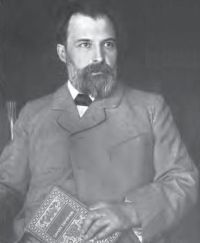 Paul Carus,
The Gospel of Buddha, Compiled from Ancient Records
Paul Carus,
The Gospel of Buddha, Compiled from Ancient Records
“ Blessed is he who has found enlightenment. He conquers, although he may be wounded; he is glorious and happy, although he may suffer; he is strong, although he may break down under the burden of his work; he is immortal, although he may die. The essence of his being is purity and goodness. 14Blessed is he who has attained the sacred state of Buddhahood, for he is fit to work out the salvation of his fellow-beings. The truth has taken its abode in him. Perfect wisdom illumines his understanding, and righteousness ensouls the purpose of all his actions. ”
 Daisetz Teitaro Suzuki,
Essays in Zen Buddhism
(1927)
Daisetz Teitaro Suzuki,
Essays in Zen Buddhism
(1927)
“ In these dhyanas we observe a gradual perfection of Buddhist life culminating in the utmost spiritual freedom of Buddhahood, which is above all intellectual conditions and beyond the reach of relative consciousness. ”
The Tibetan Book of the Dead (1927)
“ Recognizing the voidness of thine own intellect to be Buddhahood, and looking upon it as being thine own consciousness, is to keep thyself in the [state of the] divine mind [43] of the Buddha. [44] Repeat this distinctly and clearly three or [even] seven times. That will recall to the mind [of the dying one] the former [i.e. when living] setting-face-to-face by the guru. Secondly, it will cause the naked consciousness to be recognized as the Clear Light; and, thirdly, recognizing one's own self [thus] , one becometh permanently united with the Dharma-Kāya and Liberation will be certain. ”
Buddhist birth stories; or, Jataka tales…
“ Accordingly on this occasion they all, with the archangels in each world-system,171 assembled in one world, and going to the future Buddha in the Heaven of Delight, they besought him, saying,“O Blessed One, when thou wast fulfilling the Ten Perfections, thou didst not do so from a desire for the60 glorious state of an archangel—Sakka, or Māra, or Brahma—or of a mighty king upon earth; thou wast fulfilling them with the hope of reaching Omniscience for the sake of the Salvation of mankind! Now has the moment come, O Blessed One, for thy Buddhahood; now has the time, O Blessed One, arrived!” ”
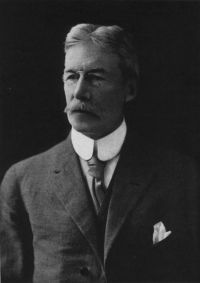 Edward Washburn Hopkins,
The Religions of India
Edward Washburn Hopkins,
The Religions of India
“ In many ways these words should be corrective of much that is hazarded today in regard to Buddhism. There is here no elaborate system of metaphysics. Wisdom consists in the truth as it is in Buddha; and before truth stand, as antecedently essential, faith and kindness; for so may one render the passive non-injury of the Brahman as taught by the Buddhist. To have faith and good works, to renounce the pomps and vanities of life, to show kindness to every living thing, to seek for salvation, to understand, and so finally to leave no second self behind to suffer again, this is Buddha's doctrine. ”
Paul Carus,
The Buddha: A Drama in Five Acts and Four Interludes
“ The Buddha called his disciples together, and having ordained them, bade them spread the Gospel, with these words translated from the Buddhist Canon:"Go ye now, O disciples, and wander forth for the benefit of the many, for the welfare of mankind, out of compassion for the world. Preach the doctrine which is glorious in the beginning, glorious in the middle, and glorious in the end, in the spirit as well as in the letter. There are beings whose eyes are scarcely covered with dust, but if the doctrine is not preached to them they cannot attain salvation. Proclaim to them a life of holiness. ”
Steven David Justin Sills, An Apostate: Nawin of Thais
“ In it he would be on an enlightened transit before the void swallowed him entirely, an omniscient second of wisdom in which egregious Buddha-gods and heaven-and-hell aberrations of the ideas of the Buddha, who surely was not a buddhist, would be known to not exist. To know something with absolute certainty beyond the realm of supposition (like the amount of love a bludgeoning spouse once had toward him, the degree of selfishness and altruism that constituted emotion and cognition, and so much else unknown to him) would be particularly refreshing after a lifetime spent in the glimmers of truth. ”
Buddhist birth stories; or, Jataka tales…
“ And himself mounted the Mountain-girded, and seated on his back, he approached the future Buddha, and cried out, “Get up, Siddhattha, from that seat! It does not belong to thee! It is meant for me!”100The Great Being listened to his words, and said, “Māra! it is not by you that the Ten Cardinal Virtues have been perfected, nor the lesser Virtues, nor the higher Virtues. It is not you who have sacrificed yourself in the five great Acts of Self-renunciation, who have diligently sought after Knowledge, and the Salvation of the world, and the attainment of Wisdom. ”
Paul Ambroise Bigandet, The Life or Legend of Gaudama, the Buddha of the Burmese…
“ The Buddhist religious constitute the thanga, or assembly of the perfect, that is to say, of the disciples who have left the world, conformed their life to that of their teacher, and striven to acquire the science that will qualify them for entering into the way leading to perfection. They are the strict followers of Buddha, who, like him, have renounced the world, to devote themselves to the two-fold object of mastering their passions and acquiring the true wisdom which alone can lead to the deliverance. ”
| editor, Sacred Books of the East (1884)
“ Under the mastership of those Buddhas he has during his whole existence observed a spiritual life, and everywhere they termed him 'the Disciple.' By this means he has promoted the interest of innumerable, incalculable hundred thousands of myriads of kotis of beings, and brought innumerable and incalculable beings to full ripeness for supreme and perfect enlightenment. In all periods he has assisted the creatures in the function of a Buddha, and in all periods he has purified his own Buddha-field, always striving to bring creatures to ripeness. ”
André Ferdinand Herold, The Life of Buddha — 2. The Buddha is Prepared to Preach the Doctrine (1927)
“ He became frightened. "The world is lost," he said to himself, "the world is undone, if the Perfect One, the Holy One, the Buddha, now stands aloof, if he does not go among men to preach the doctrine and propagate the knowledge." ”
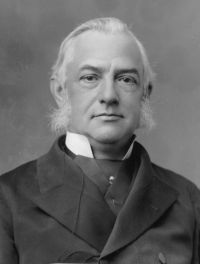 F. Max Müller,
Chips from a German Workshop, Volume 1
F. Max Müller,
Chips from a German Workshop, Volume 1
“ Buddha himself went through the school of the Brahmans. He performed their penances, he studied their philosophy, [244] and he at last claimed the name of "the Buddha," or "the Enlightened," when he threw away the whole ceremonial, with its sacrifices, superstitions, penances, and castes, as worthless, and changed the complicated systems of philosophy into a short doctrine of salvation. This doctrine of salvation has been called pure Atheism and Nihilism, and it no doubt was liable to both charges in its metaphysical character, and in that form in which we chiefly know it. ”
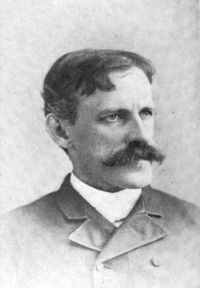 William Elliot Griffis,
The Religions of Japan, from the Dawn of History to the Era of Méiji
William Elliot Griffis,
The Religions of Japan, from the Dawn of History to the Era of Méiji
“ The Buddha is the adept in the wisdom of Buddhism (Bodhijnána) whose first duty, so long as he remains on earth, is to communicate his wisdom to those who are willing to receive it. These willing learners are the 'Bodhisattwas,' so called from their hearts being inclined to the wisdom of Buddhism, and 'Sanghas,' from their companionship with one another, and with their Buddha or teacher, in the Viháras or coenobitical establishments. ”
Clayton Edwards, A Treasury of Heroes and Heroines
“ In the truth that Buddha had acquired he learned many things. Chief of them, as he believed, are four great facts of life and nature from which the soul cannot escape—that there will always be sorrow and suffering in the world; that these are caused by clinging to things that are always changing or dying; that the only way to obtain peace is to renounce these things and care for them no longer; and that the only way to live is to walk in the paths of righteousness, honesty, virtue, and to believe in the Buddhist faith. ”
William James, The Varieties of Religious Experience (1902)
“ And the Buddha, in pointing out what he called 'the middle way' to his disciples, told them to abstain from both extremes, excessive mortification being as unreal and unworthy as mere desire and pleasure. The only perfect life, he said, is that of inner wisdom, which makes one thing as indifferent to us as another, and thus leads to rest, to peace, and to Nirvâna. ”
 Sir Monier Monier-Williams,
Buddhism, in Its Connexion with Brahmanism and Hinduism…
Sir Monier Monier-Williams,
Buddhism, in Its Connexion with Brahmanism and Hinduism…
“ In proof of this let us revert for a moment to the insight we have gained into the origin of Buddhism.It will be seen that the most remarkable feature of the Buddha’s teaching, so far as it has been stated in the preceding Lectures, was that he altogether ignored the existence in human nature of any spiritual aspirations, affections, or instincts higher than or distinct from the natural aspirations, affections, and instincts of humanity; and of any force outside of human nature capable of aiding a man’s own efforts in his struggle for salvation. ”
Sir Monier Monier-Williams,
Buddhism, in Its Connexion with Brahmanism and Hinduism…
“ The generality of men had to content themselves with the first and second ways.What the Buddha then did was this:—First he stretched out the right hand of brotherhood to all mankind by inviting all without exception to join his fraternity of celibate monks, which he wished to be co-extensive with the world itself. Then he abolished the first and second ways of salvation (p. 95) , that is, Yajña, ‘sacrifices,’ and Bhakti, ‘devotion to personal gods,’ and substituted for these meditation and moral conduct as the only road to true knowledge and emancipation. ”
Daisetz Teitaro Suzuki,
Essays in Zen Buddhism
(1927)
“ When we want, therefore, to grasp the spirit of Buddhism, which essentially develops from the content of Enlightenment, we have to get acquainted with the signification of the experience of the founder,—experience by virtue of which he is indeed the Buddha and the founder of the religious system which goes under his name. ”
Buddhist birth stories; or, Jataka tales…
“ Advancing to the perfection of equanimity, thou shalt attain supreme Buddhaship. Then he thought, “These are the only conditions in this world that, bringing Buddhaship to perfection and constituting a Buddha, have to be fulfilled by Bodhisattas; beside the ten Perfections there are no others. And these ten Perfections are neither in the heaven above nor in the earth below, nor are they to be found in the east or the other quarters, but reside in my heart of flesh.” ”
Buddhist birth stories; or, Jataka tales…
“ When they had heard the Teacher’s discourse, they were pleased at heart; and rising up, they bowed down to the One Mighty by Wisdom, and giving up the wrong belief as their refuge, they took refuge in the Buddha. And from that time they were in the habit of going with Anātha Piṇḍika to the Wihāra, taking garlands and perfumes with them, and of hearing the Truth, and of giving gifts, and of keeping the Precepts, and of making confession. ”
André Ferdinand Herold, The Life of Buddha — 18. The Buddha Enters Nirvana (1927)
“ Listen: the air is joyous with the songs that the happy Gods are singing in the sky in honor of the Buddha. But the Buddha is paid a more enduring honor than this. Monks, nuns, believers, all those who see the truth, all those who live within the law, they are the ones that do the Buddha supreme honor. Therefore you must live according to the law, Ananda, and, even in the most trivial matters, you must follow the sacred path of truth. ”
 Herbert George Wells,
The Soul of a Bishop
(1917)
Herbert George Wells,
The Soul of a Bishop
(1917)
“ The Buddhists made the Lord Buddha the leader of men out of the futility and confusion of material existence to the great peace beyond. But it is all one story really, the story of the two essential Beings, always the same story and the same perplexity cropping up under different names, the story of one being who stirs us, calls to us, and leads us, and of another who is above and outside and in and beneath all things, inaccessible and incomprehensible. ”
 Theodore Duka,
Life and works of Alexander Csoma de Körös
(1885)
Theodore Duka,
Life and works of Alexander Csoma de Körös
(1885)
“ The Buddhas, Bodhisatwas, and many other pretended divinities, good and evil spirits, are, in general, fancied or metaphysical beings, which in the Buddhistic Pantheon have been multiplied to an incredible number. It is impossible, therefore, and unnecessary too, to labour to describe them with any precision. Their names, epithets, or attributes being taken sometimes in a general, sometimes in a particular sense, many times as symbolical names, or as so many models of virtue, vice, mercy, wisdom, power, &c. ”
William Elliot Griffis,
The Religions of Japan, from the Dawn of History to the Era of Méiji
“ The three-fold principle laid down by Gautama, and now in dogma, literature, art and worship, a triad or formal trinity, is, Buddha, the attainment of Buddha-hood, or perfect enlightenment, through meditation and benevolence; Karma, the law of cause and effect; and Dharma, discipline or order; or, the Lord, the Law and the Church. Paying no attention to questions of cosmogony or theogony, the universe is accepted as an ultimate fact. Matter is eternal. Creation exists but not a Creator. All is god, but God is left out of consideration. The gods are even less than Buddhas. ”
Paul Ambroise Bigandet, The Life or Legend of Gaudama, the Buddha of the Burmese…
“ It may be said in favour of Buddhism, that no philosophico-religious system has ever upheld, to an equal degree, the notions of a saviour and deliverer, and of the necessity of his mission for procuring the salvation, in a Buddhist sense, of man. The rôle of Buddha, from beginning to end, is that of a deliverer, who preaches a law designed to secure to man deliverance from all the miseries under which he is labouring. ”
W. H. Knight, Diary of a Pedestrian in Cashmere and Thibet
“ In order to form clear and accurate ideas of the religion of Buddha, it would be necessary to study a vast number of volumes, some of them contradictory and of very doubtful authority, and the result would appear hardly to compensate for the trouble, so altered has modern Buddhism become from ancient, and into so many different systems has it been divided in the many different countries in which it is professed. Among its doctrines there is much that is virtuous and true. ”
W. H. Davenport Adams, Curiosities of Superstition, and Sketches of Some Unrevealed Religions
“ But, as is the case with all religious systems of purely human origin, Buddhism gradually fell away from the standard of its founder. The heart craves an object of worship, a something or some one on which or on whom to rest its hopes and fears, and the Buddhists, untaught to reverence a Supreme Being, transferred their adoration to Buddha himself, whose life and work they involved in a cloud of myth and legend. His relics came to be worshipped, and reliquary towers for their preservation were everywhere erected. ”
Paul Carus,
The Gospel of Buddha, Compiled from Ancient Records
“ Thus, by denying the existence of that which appears to be our soul and for the destruction of which in death we tremble, the Buddha actually opens (as he expresses it himself) the door of immortality to mankind; and here lies the corner-stone of his ethics and also of the comfort as well as the enthusiasm which his religion imparts. Any one who does not see the positive aspect of Buddhism, will be unable to understand how it could exercise such a powerful influence upon millions and millions of people. ”
André Ferdinand Herold, The Life of Buddha — 15. The Buddha and the Shepherd (1927)
“ For if he were a God, how could he set in motion the wheel of the law? Imagine the Buddha as a God, Ananda; men would soon lose heart. They would say, 'The Buddha, who is a God, has happiness, holiness, perfection ”
 Augustus Hopkins Strong,
A Tour of the Missions: Observations and Conclusions
Augustus Hopkins Strong,
A Tour of the Missions: Observations and Conclusions
“ Here is [145] a seeking, but not a finding, a groping in the dark, with only the faint rays of conscience to show man the way. Yet he who is the Light of the World was lighting every man, before his advent in the flesh, and even Buddha was a reformer and an advance upon the Brahmanism of his time. He preached the doctrine of unselfish devotion, but he turned it into error by ignoring man's duty to himself. ”
Sir Monier Monier-Williams,
Buddhism, in Its Connexion with Brahmanism and Hinduism…
“ Again, what was the effect of the Buddha’s leading men to believe that all supernatural revelation was unneeded—that all enlightenment came from within, and that every man was competent to think out true knowledge for himself by the exercise of his own reasoning powers, in the way that the Buddha himself had done? ”
