“ Always to the right Burrows bore, until in a little while he struck the old Indian trail that followed the Nueces southward, and that passed, twenty-eight miles to the southeast, through Lone Elm. Here Burrows urged the sorrel into a steady lope. As he settled himself in the saddle for a long ride he heard the drumming of hoofs, the hollow “thwack” of chaparral against wooden stirrups, the whoop of a Comanche; and Wells Pearson burst out of the brush at the right of the trail like a precocious yellow chick from a dark green Easter egg. ”
Burrows
Definition and stakes
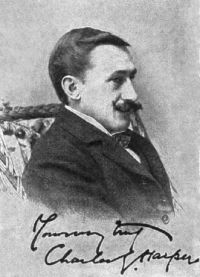
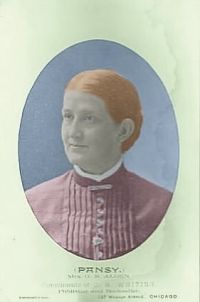
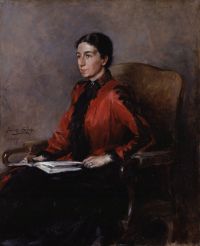
The concept of "Burrows" encompasses both physical landscapes and human narratives, appearing as a geographical feature in texts like Charles G. Harper’s The North Devon Coast, where Braunton Burrows symbolizes desolation and challenge, and as a surname in literary and historical contexts. Authors such as O. Henry portray Burrows as a rugged, morally complex figure in frontier tales, while Mrs.
Humphry Ward uses the name to critique societal power structures. Meanwhile, entries in Dictionary of National Biography trace the Burrows family’s legacy, weaving together personal and scholarly histories. These varied depictions reveal "Burrows" as a multifaceted symbol, bridging the natural world and human achievement.
Quotes about “Burrows”
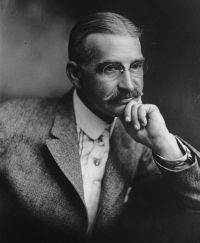 L. Frank Baum,
Mary Louise — XXVI. THE LETTER
(1916)
L. Frank Baum,
Mary Louise — XXVI. THE LETTER
(1916)
“ If you can, give aid to Hathaway, whom I greatly admire, for we are in a way responsible for his troubles. As for Mrs. Burrows, I consider her a woman of character and honor. That she might keep a pledge made to her dead husband she sinned against the law without realizing the enormity of her offense. If anyone is to blame it is poor John Burrows, who was not justified in demanding so dangerous a pledge from his wife; but he was dying at the time and his judgment was impaired. Let us be just to all and so remain just to ourselves. ”
“ Suppose there ain’t but one hat in the Lone Elm store, Burr!” “Then,” said Burrows, darkly, “the best man of us’ll take it back to the Espinosa.” “Oh, man!” cried Pearson, throwing his hat high and catching it again, “there’s nothing like you come off the sheep ranges before. You talk good and collateral to the occasion. And if there’s more than one?” “Then,” said Burrows, “we’ll pick our choice and one of us’ll get back first with his and the other won’t.” “There never was two souls,” proclaimed Pearson to the stars, “that beat more like one heart than yourn and mine. ”