Capitol (ancient Rome)

Definition and stakes

The Circle of Knowledge: A Classified…

“ The Esquiline and Viminal are modern industrial quarters. The Palatine, with the Forum below it on the east, are covered with important ancient ruins. The Capitoline, crowned by the Capitol, the most imposing of the hills, the center of ancient life and worships, has, apart from the new monument of Victor Emmanuel, suffered little change since the sixteenth century.
Mediæval and Rome occupies chiefly the plain, known as the Campus Martius of ancient times, nearer the river, and on the slopes of the Pincian Hill, to the north, extending thence eastward to the Quirinal and Viminal.
”
Source: Gutenberg

Charles Bucke,  Ruins of Ancient Cities (Vol. 2 of 2…

“ Not only is the Capitol fallen, but its very name, expressive of dominion, and once fondly considered as an omen of empire, is now almost lost in the semi-barbarous appellation of Campi-doglio. “This place,” says a celebrated French traveller, “which gave law to the universe, where Jupiter had his temple and Rome her senate; from whence of old the Roman eagles were continually flying into every quarter of the globe, and from every quarter of the globe continually winging their way back with victories ”
Source: Gutenberg

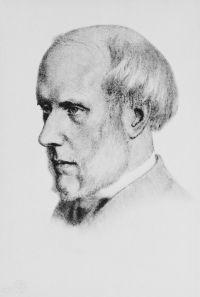
Portrait of Hugh Macmillan Hugh Macmillan,  Roman Mosaics; Or, Studies in Rome and Its Neighbourhood

“ It is surprisingly small to have contained such a large number of buildings, and to have bulked so prominently in the eye of the world; its greatest length being only six hundred and seventy-one feet, and its greatest breadth about two hundred and two feet. Beginning at the north end, we see before us the vast mass of the ancient Capitol, the proudest symbol of the majesty of Rome, crowned with the great staring medieval structures of the Roman municipality, rising up into the campanile of Michael Angelo. ”
Source: Gutenberg

Get perspective with Kwize: daily news enlightened by great literature