Cesare Beccaria

Definition and stakes

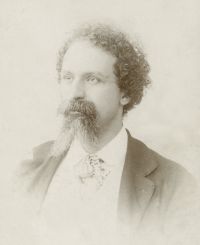
Portrait of Enrico Ferri Enrico Ferri The Positive School of Criminology

Thereupon the judges and jurists protested that penal justice would be impossible, because it could not get any information, since a man suspected of a crime would not confess his guilt voluntarily. Hence they accused Beccaria of being the protector of robbers and murderers, because he wanted to abolish the only means of compelling them to a confession, the torture. But Cesare Beccaria had on his side the magic power of truth. He was truly the electric accumulator of his time, who gathered from its atmosphere the presage of the coming revolution, the stirring of the human conscience.
Source: Gutenberg

Portrait of Cesare Beccaria Cesare Beccaria An Essay on Crimes and Punishments… (1764)

I am sensible that the voice of one philosopher is too weak to be heard amidst the clamours of a multitude, blindly influenced by custom; but there is a small number of sages, scattered on the face of the earth, who will echo to me from the bottom of their hearts; and if these truths should happily force their way to the thrones of princes, be it known to them, that they come attended with the secret wishes of all mankind
Source: Wikisource

Adolfo Bartoli and Hermann Oelsner 1911 Encyclopædia Britannica (1911)

Social science. Cesare Beccaria, in his treatise Dei delitti e delle pene, made a contribution to the reform of the penal system and promoted the abolition of torture.
The man in whom above all others the literary revival of the 18th century was most conspicuously embodied was Giuseppe Parini. He was born in a Lombard village in 1729, was mostly educated at Milan, and as a youth was known among the Arcadian poets by the name of Darisbo Elidonio. Even as an Arcadian, however, Parini showed signs of departing Satire: Parini. from the common type.
Source: Wikisource

Get perspective with Kwize: daily news enlightened by great literature