“ Could not the grave forget thee, and lay lowSome less majestic, less beloved head?Childe Harold's Pilgrimage. Canto iv. Stanza 168.Oh that the desert were my dwelling-place, [547:1] With one fair spirit for my minister,That I might all forget the human race,And hating no one, love but only her!Childe Harold's Pilgrimage. Canto iv. Stanza 177.There is a pleasure in the pathless woods;There is a rapture on the lonely shore;There is society, where none intrudes,By the deep sea, and music in its roar:I love not man the less, but Nature more. ”
Childe Harold's Pilgrimage
Definition and stakes
Childe Harold's Pilgrimage, a four-part narrative poem by Lord Byron, examines the disillusionment of a young wanderer seeking comfort in foreign lands. Published between 1812 and 1818, it reflects the melancholy of the post-Napoleonic era and embodies the Byronic hero archetype.
Byron’s protagonist, a self-exiled figure, meditates on historical and natural landscapes, as seen in the line “There is a pleasure in the pathless woods.” The poem’s use of Spenserian stanzas and its autobiographical elements influenced Romanticism, merging personal introspection with broader themes of existential inquiry. Its legacy persists through the cult of the Byronic hero and its lasting impact on art and literature.
Quotes about “Childe Harold's Pilgrimage”
Baron George Gordon Byron Byron, Childe Harold's Pilgrimage
“ O'er vales that teem with fruits, romantic hills, (Oh that such hills upheld a free-born race!) Whereon to gaze the eye with joyaunce fills, Childe Harold wends through many a pleasant place. Though sluggards deem it but a foolish chase, And marvel men should quit their easy chair, The toilsome way, and long, long league to trace. Oh, there is sweetness in the mountain air And life, that bloated Ease can never hope to share. ”
Baron George Gordon Byron Byron, Childe Harold's Pilgrimage
“ From the dark barriers of that rugged clime, E'en to the centre of Illyria's vales, Childe Harold passed o'er many a mount sublime, Through lands scarce noticed in historic tales: Yet in famed Attica such lovely dales Are rarely seen; nor can fair Tempe boast A charm they know not ”
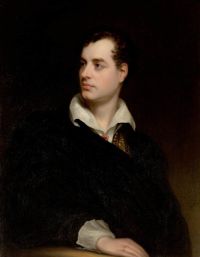 Lord Byron,
Childe Harold's Pilgrimage
(1812)
Lord Byron,
Childe Harold's Pilgrimage
(1812)
“ Amidst this wreck, where thou hast made a shrine And temple more divinely desolate, Among thy mightier offerings here are mine, Ruins of years—though few, yet full of fate: If thou hast ever seen me too elate, Hear me not; but if calmly I have borne Good, and reserved my pride against the hate Which shall not whelm me, let me not have worn This iron in my soul in vain—shall THEY not mourn? ”
Baron George Gordon Byron Byron, The Works of Lord Byron, Vol. 7…
“ Childe Harold's Pilgrimage. Traduction française littérale, par l'Abbé A. Julien. Paris, Poussielque frères. 1883. [12o. [Lorenz, 1886.] IX.Childe Harold, Édition classique, précédée d'une notice littéraire, par M. A. Elwall. Paris, Delalain frères. 1892. [12o. [Lorenz, 1900.] X.Childe Harold, Édition classique, avec une notice biographique et littéraire, un appendice et des notes par Douglas Gibb. Paris, Belin frères. 1892. [12o. [Lorenz, 1900.] [197] German. I.Harold, der Verwiesene. Aus. d. Engl. v. Karl Baldamus. Leipzig, Hartmann. 1835. ”
Lord Byron,
Childe Harold's Pilgrimage
(1812)
“ And such the storm of battle on this day, And such the frenzy, whose convulsion blinds To all save carnage, that, beneath the fray, An earthquake reeled unheededly away! None felt stern Nature rocking at his feet, And yawning forth a grave for those who lay Upon their bucklers for a winding-sheet; Such is the absorbing hate when warring nations meet. ”
Lord Byron,
Childe Harold's Pilgrimage
(1812)
“ Clarens! sweet Clarens! birthplace of deep Love! Thine air is the young breath of passionate thought; Thy trees take root in love; the snows above The very glaciers have his colours caught, And sunset into rose-hues sees them wrought By rays which sleep there lovingly: the rocks, The permanent crags, tell here of Love, who sought In them a refuge from the worldly shocks, Which stir and sting the soul with hope that woos, then mocks. C. Clarens! by heavenly feet thy paths are trod,— Undying Love's, who here ascends a throne To which the steps are mountains ”
Baron George Gordon Byron Byron, Childe Harold's Pilgrimage
“ Come, blue-eyed maid of heaven!—but thou, alas, Didst never yet one mortal song inspire— Goddess of Wisdom! here thy temple was, And is, despite of war and wasting fire, And years, that bade thy worship to expire: But worse than steel, and flame, and ages slow, Is the drear sceptre and dominion dire Of men who never felt the sacred glow That thoughts of thee and thine on polished breasts bestow. ”
Lord Byron,
Childe Harold's Pilgrimage
(1812)
“ The double night of ages, and of her, Night's daughter, Ignorance, hath wrapt, and wrap All round us; we but feel our way to err: The ocean hath its chart, the stars their map; And knowledge spreads them on her ample lap; But Rome is as the desert, where we steer Stumbling o'er recollections: now we clap Our hands, and cry, 'Eureka!' it is clear— When but some false mirage of ruin rises near. ”
Baron George Gordon Byron Byron, Childe Harold's Pilgrimage
“ The Queen who conquers all must yield to thee— The Pleasures fled, but sought as warm a clime; And Venus, constant to her native sea, To nought else constant, hither deigned to flee, And fixed her shrine within these walls of white; Though not to one dome circumscribeth she Her worship, but, devoted to her rite, A thousand altars rise, for ever blazing bright. ”
Baron George Gordon Byron Byron, Childe Harold's Pilgrimage
“ Yet are thy skies as blue, thy crags as wild: Sweet are thy groves, and verdant are thy fields, Thine olives ripe as when Minerva smiled, And still his honeyed wealth Hymettus yields; There the blithe bee his fragrant fortress builds, The freeborn wanderer of thy mountain air; Apollo still thy long, long summer gilds, Still in his beam Mendeli's marbles glare; Art, Glory, Freedom fail, but Nature still is fair. ”
Lord Byron,
Childe Harold's Pilgrimage
(1812)
“ I live not in myself, but I become Portion of that around me; and to me, High mountains are a feeling, but the hum Of human cities torture: I can see Nothing to loathe in Nature, save to be A link reluctant in a fleshly chain, Classed among creatures, when the soul can flee, And with the sky, the peak, the heaving plain Of ocean, or the stars, mingle, and not in vain. ”
Lord Byron,
Childe Harold's Pilgrimage
(1812)
“ And thou, the thunder-stricken nurse of Rome! She-wolf! whose brazen-imaged dugs impart The milk of conquest yet within the dome Where, as a monument of antique art, Thou standest:—Mother of the mighty heart, Which the great founder sucked from thy wild teat, Scorched by the Roman Jove's ethereal dart, And thy limbs blacked with lightning—dost thou yet Guard thine immortal cubs, nor thy fond charge forget? ”
Lord Byron,
Childe Harold's Pilgrimage
(1812)
“ Lo, Nemi! navelled in the woody hills So far, that the uprooting wind which tears The oak from his foundation, and which spills The ocean o'er its boundary, and bears Its foam against the skies, reluctant spares The oval mirror of thy glassy lake; And, calm as cherished hate, its surface wears A deep cold settled aspect nought can shake, All coiled into itself and round, as sleeps the snake. ”
Lord Byron,
Childe Harold's Pilgrimage
(1812)
“ Hard is his heart whom charms may not enslave; But Harold felt not as in other times, And left without a sigh the land of war and crimes. XVII. He that has sailed upon the dark blue sea, Has viewed at times, I ween, a full fair sight; When the fresh breeze is fair as breeze may be, The white sails set, the gallant frigate tight, Masts, spires, and strand retiring to the right, The glorious main expanding o'er the bow, The convoy spread like wild swans in their flight, The dullest sailer wearing bravely now, So gaily curl the waves before each dashing prow. ”
Baron George Gordon Byron Byron, Childe Harold's Pilgrimage
“ What beauties doth Lisboa first unfold! Her image floating on that noble tide, Which poets vainly pave with sands of gold, But now whereon a thousand keels did ride Of mighty strength, since Albion was allied, And to the Lusians did her aid afford A nation swoll'n with ignorance and pride, Who lick, yet loathe, the hand that waves the sword. To save them from the wrath of Gaul's unsparing lord. ”
Baron George Gordon Byron Byron, Childe Harold's Pilgrimage
“ And surely she who now so fondly rears Thy youth, in thee, thus hourly brightening, Beholds the rainbow of her future years, Before whose heavenly hues all sorrow disappears. Young Peri of the West!—'tis well for me My years already doubly number thine; My loveless eye unmoved may gaze on thee, And safely view thy ripening beauties shine: Happy, I ne'er shall see them in decline; Happier, that while all younger hearts shall bleed Mine shall escape the doom thine eyes assign To those whose admiration shall succeed, But mixed with pangs to Love's even loveliest hours decreed. ”
Baron George Gordon Byron Byron, Childe Harold's Pilgrimage
“ All heaven and earth are still—though not in sleep, But breathless, as we grow when feeling most; And silent, as we stand in thoughts too deep: — All heaven and earth are still: from the high host Of stars, to the lulled lake and mountain-coast, All is concentered in a life intense, Where not a beam, nor air, nor leaf is lost, But hath a part of being, and a sense Of that which is of all Creator and defence. ”
Baron George Gordon Byron Byron, Childe Harold's Pilgrimage
“ Nay, smile not at my sullen brow, Alas! I cannot smile again: Yet Heaven avert that ever thou Shouldst weep, and haply weep in vain. And dost thou ask what secret woe I bear, corroding joy and youth? And wilt thou vainly seek to know A pang even thou must fail to soothe? It is not love, it is not hate, Nor low Ambition's honours lost, That bids me loathe my present state, And fly from all I prized the most: It is that weariness which springs From all I meet, or hear, or see: To me no pleasure Beauty brings; Thine eyes have scarce a charm for me. ”
Baron George Gordon Byron Byron, Childe Harold's Pilgrimage
“ All, all forgotten—and shall man repine That his frail bonds to fleeting life are broke? Cease, fool! the fate of gods may well be thine: Wouldst thou survive the marble or the oak, When nations, tongues, and worlds must sink beneath the stroke? ”
Lord Byron,
Childe Harold's Pilgrimage
(1812)
“ Where lone Utraikey forms its circling cove, And weary waves retire to gleam at rest, How brown the foliage of the green hill's grove, Nodding at midnight o'er the calm bay's breast, As winds come whispering lightly from the west, Kissing, not ruffling, the blue deep's serene: Here Harold was received a welcome guest; ”
Baron George Gordon Byron Byron, Childe Harold's Pilgrimage
“ Above me are the Alps, The palaces of Nature, whose vast walls Have pinnacled in clouds their snowy scalps, And throned Eternity in icy halls Of cold sublimity, where forms and falls The avalanche—the thunderbolt of snow! All that expands the spirit, yet appals, Gathers around these summits, as to show How Earth may pierce to Heaven, yet leave vain man below. ”
Lord Byron,
Childe Harold's Pilgrimage
(1812)
“ But in his delicate form—a dream of Love, Shaped by some solitary nymph, whose breast Longed for a deathless lover from above, And maddened in that vision—are expressed All that ideal beauty ever blessed The mind within its most unearthly mood, When each conception was a heavenly guest— A ray of immortality—and stood Starlike, around, until they gathered to a god? ”
Lord Byron,
Childe Harold's Pilgrimage
(1812)
“ The negligently grand, the fruitful bloom Of coming ripeness, the white city's sheen, The rolling stream, the precipice's gloom, The forest's growth, and Gothic walls between, The wild rocks shaped as they had turrets been In mockery of man's art; and these withal A race of faces happy as the scene, Whose fertile bounties here extend to all, Still springing o'er thy banks, though empires near them fall. ”
Lord Byron,
Childe Harold's Pilgrimage
(1812)
“ There is a stern round tower of other days, Firm as a fortress, with its fence of stone, Such as an army's baffled strength delays, Standing with half its battlements alone, And with two thousand years of ivy grown, The garland of eternity, where wave The green leaves over all by time o'erthrown: What was this tower of strength? within its cave What treasure lay so locked, so hid?—A woman's grave. ”
Baron George Gordon Byron Byron, Childe Harold's Pilgrimage
“ The morn is up again, the dewy morn, With breath all incense, and with cheek all bloom, Laughing the clouds away with playful scorn, And living as if earth contained no tomb,— And glowing into day: we may resume The march of our existence: and thus I, Still on thy shores, fair Leman! may find room And food for meditation, nor pass by Much, that may give us pause, if pondered fittingly. ”
Lord Byron,
Childe Harold's Pilgrimage
(1812)
“ He who hath loved not, here would learn that lore, And make his heart a spirit: he who knows That tender mystery, will love the more, For this is Love's recess, where vain men's woes, And the world's waste, have driven him far from those, For 'tis his nature to advance or die; He stands not still, but or decays, or grows Into a boundless blessing, which may vie With the immortal lights, in its eternity! ”
Lord Byron,
Childe Harold's Pilgrimage
(1812)
“ It is in vain that we would coldly gaze On such as smile upon us; the heart must Leap kindly back to kindness, though disgust Hath weaned it from all worldlings: thus he felt, For there was soft remembrance, and sweet trust In one fond breast, to which his own would melt, And in its tenderer hour on that his bosom dwelt. ”
Lord Byron,
Childe Harold's Pilgrimage
(1812)
“ But when the rising moon begins to climb Its topmost arch, and gently pauses there; When the stars twinkle through the loops of time, And the low night-breeze waves along the air, The garland-forest, which the grey walls wear, Like laurels on the bald first Caesar's head; When the light shines serene, but doth not glare, Then in this magic circle raise the dead: Heroes have trod this spot—'tis on their dust ye tread. ”
Baron George Gordon Byron Byron, Childe Harold's Pilgrimage
“ Existence may be borne, and the deep root Of life and sufferance make its firm abode In bare and desolate bosoms: mute The camel labours with the heaviest load, And the wolf dies in silence. Not bestowed In vain should such examples be; if they, Things of ignoble or of savage mood, Endure and shrink not, we of nobler clay May temper it to bear,—it is but for a day. ”
Lord Byron,
Childe Harold's Pilgrimage
(1812)
“ Despoiled yet perfect, with thy circle spreads A holiness appealing to all hearts— To art a model; and to him who treads Rome for the sake of ages, Glory sheds Her light through thy sole aperture; to those Who worship, here are altars for their beads; And they who feel for genius may repose Their eyes on honoured forms, whose busts around them close. ”
Lord Byron,
Childe Harold's Pilgrimage
(1812)
“ Is it not better, then, to be alone, And love Earth only for its earthly sake? By the blue rushing of the arrowy Rhone, Or the pure bosom of its nursing lake, Which feeds it as a mother who doth make A fair but froward infant her own care, Kissing its cries away as these awake;— Is it not better thus our lives to wear, Than join the crushing crowd, doomed to inflict or bear? ”
Baron George Gordon Byron Byron, Childe Harold's Pilgrimage
“ This must he feel, the true-born son of Greece, If Greece one true-born patriot can boast: Not such as prate of war but skulk in peace, The bondsman's peace, who sighs for all he lost, Yet with smooth smile his tyrant can accost, And wield the slavish sickle, not the sword: Ah, Greece! they love thee least who owe thee most— Their birth, their blood, and that sublime record Of hero sires, who shame thy now degenerate horde! ”
Baron George Gordon Byron Byron, Childe Harold's Pilgrimage
“ Ye stars! which are the poetry of heaven, If in your bright leaves we would read the fate Of men and empires,—'tis to be forgiven, That in our aspirations to be great, Our destinies o'erleap their mortal state, And claim a kindred with you; for ye are A beauty and a mystery, and create In us such love and reverence from afar, That fortune, fame, power, life, have named themselves a star. ”
Lord Byron,
Childe Harold's Pilgrimage
(1812)
“ He is an evening reveller, who makes His life an infancy, and sings his fill; At intervals, some bird from out the brakes Starts into voice a moment, then is still. There seems a floating whisper on the hill, But that is fancy, for the starlight dews All silently their tears of love instil, Weeping themselves away, till they infuse Deep into Nature's breast the spirit of her hues. ”
Lord Byron,
Childe Harold's Pilgrimage
(1812)
“ We wither from our youth, we gasp away— Sick—sick; unfound the boon, unslaked the thirst, Though to the last, in verge of our decay, Some phantom lures, such as we sought at first— But all too late,—so are we doubly curst. Love, fame, ambition, avarice—'tis the same— Each idle, and all ill, and none the worst— For all are meteors with a different name, And death the sable smoke where vanishes the flame. ”
Baron George Gordon Byron Byron, Childe Harold's Pilgrimage
“ Filled with the face of heaven, which, from afar, Comes down upon the waters; all its hues, From the rich sunset to the rising star, Their magical variety diffuse: And now they change; a paler shadow strews Its mantle o'er the mountains; parting day Dies like the dolphin, whom each pang imbues With a new colour as it gasps away, The last still loveliest, till—'tis gone—and all is grey. ”
Related terms
Authors who wrote about “Childe Harold's Pilgrimage”
Albert HauckP. S. AllenE. S. Bates Percival LowellBaron George Gordon Byron Byron
 Georg Brandescontessa di Teresa Guiccioli
 William HowittVariousH. E. MarshallElizabeth Stoddard
 Ebenezer Cobham Brewer
 E. Lynn Linton
 Donald Grant Mitchell
 Frances Hodgson Burnett
 Alfred AustinEdward Forbes
 Marie CorelliMargaret BallJohn William Cousin
Percival LowellBaron George Gordon Byron ByronGeorg Brandescontessa di Teresa GuiccioliWilliam HowittVariousH. E. MarshallElizabeth StoddardEbenezer Cobham BrewerE. Lynn LintonDonald Grant MitchellFrances Hodgson BurnettAlfred AustinEdward ForbesMarie CorelliMargaret BallJohn William Cousin