Chumbi Valley

Definition and stakes

Edmund Candler,  The Unveiling of Lhasa

“ Much has been written and duly contradicted about the fertility of the Chumbi Valley. If one does not expect orange-groves and rice-fields at 12,000 feet, it must be admitted that the valley is, relatively speaking, fertile—that is to say, its produce is sufficient to support its three or four thousand inhabitants.
The lower valley produces buckwheat, turnips, potatoes, radishes, and barley. The latter, the staple food of the Tibetans, has, when ground, an appetizing smell very like oatmeal. The upper valley is quite sterile, and produces nothing but barley, which does not ripen
”
Source: Gutenberg

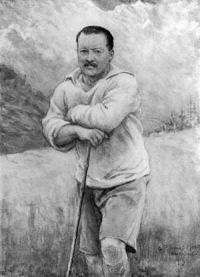
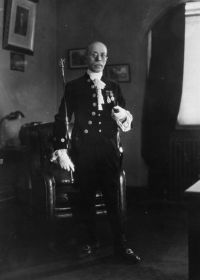
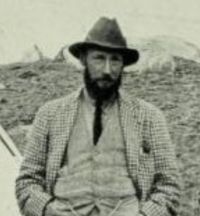
Portrait of Charles Howard-Bury Charles Howard-Bury,  Mount Everest, the Reconnaissance…

“ When we turned our backs on Phari and started to march down the Chumbi Valley, we had left the real Tibet behind us. I could not somehow look upon the Chumbi Valley as being a part of Tibet. Its characteristics, its houses, its people, its vegetation, are all so different from the greater part of Tibet. There are not the same cold winds that freeze the very marrow, nor are there the wide plains and the undulating hills with their extensive views. ”
Source: Gutenberg

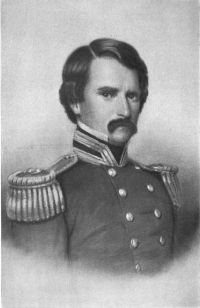
Portrait of Charles Granville Bruce Charles Granville Bruce,  Darjeeling to the Rongbuk Glacier Base Camp (1922)

“ The descent into Chumbi, as it always is, was very striking. One leaves Sikkim behind and enters a valley which reminds one much more of the west than of the east. At Chumbi itself we were entertained by the Trade Agent, Mr. Macdonald, who accompanied us afterwards up to Phari Dzong. The road from Chumbi to Phari Dzong is again rather different in type, but quite beautiful in its way, and as wild as it is possible to make a forested gorge. It is very striking, emerging from the black and forested gorge of the Ammo Chu (the Chumbi river) on to the bare plateaux of Tibet. ”
Source: Wikisource

Get perspective with Kwize: daily news enlightened by great literature