Codling moth

Definition and stakes

Harold W. Fairbanks,  Conservation Reader

“ The codling moth, whose larva is the little apple worm, causes an immense loss in our fruit orchards. The cotton-boll weevil, which destroys so much of the cotton, is, like the codling moth, an insect imported from another country. The San José scale reached California from China and has now spread throughout our country. It has a special fondness for the sap of fruit trees, and, being so small, was not noticed until it had got beyond control. This scale causes more loss than any other of the tree insects. ”
Source: Gutenberg

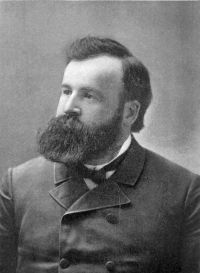
Portrait of Cyril Adelbert Stebbins Cyril Adelbert Stebbins,  A Guide to the Birds of the Pacific Coast (1908)

“ Learn to see correctly and to interpret wisely. Many see the apple pecked and the wheat kernel disappear, but do not see the quick efforts of the same birds which mean the death of a codling moth larva (the small "worm" found in apples) or a grasshopper. Cultivate sharp eyes for the good work done as well as for the evil and you will have a good basis for economic judgment.
Life History of the Codling Moth.
From drawings made by pupils.
Some Bird Laws
Federal laws: "The importation of the English sparrow and other injurious birds—is prohibited."
”
Source: Wikisource

Various,  Encyclopaedia Britannica, 11th Edition…

“ The codlin moths (Carpocapsa) pass the winter as resting full-grown larvae, which seek shelter and spin cocoons in autumn, but do not pupate until the succeeding spring. Lastly, many of the Lepidoptera hibernate in the pupal stage; the death’s head moth (Acherontia) and the cabbage-white butterflies (Pieris) are familiar examples of such. The last-named insects afford instances of the “double-brooded” condition, two complete life-cycles being passed through in the year. ”
Source: Gutenberg

Get perspective with Kwize: daily news enlightened by great literature