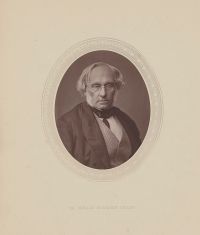
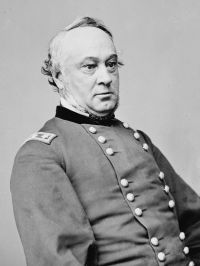
The Continental Army, established in 1775 by the Second Continental Congress, served as the unified military force of the Thirteen Colonies during the American Revolutionary War and later became the foundation of the U.S. Army. Created to coordinate colonial resistance against British rule, it was commanded by George Washington and evolved from scattered militias into an organized, though frequently under-resourced, force. Historians such as Benson John Lossing emphasized its shift from patriotic citizen-soldiers into a disciplined institution, while Baron Jomini critiqued its size in comparison to European military forces.
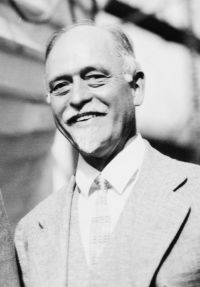
Mary Theresa Leiter pointed out the difficulties in recruitment, highlighting the Continental Army’s dependence on volunteers willing to serve beyond the boundaries of their home states. These viewpoints illustrate the army’s crucial role in shaping American military identity, balancing idealism with the practical measures needed to sustain a revolutionary war effort. Its legacy lies in its ability to adapt to logistical and political limitations, ultimately laying the groundwork for a centralized national defense system.
 Benson John Lossing,
The Pictorial Field-Book of the Revolution…
Benson John Lossing,
The Pictorial Field-Book of the Revolution…