“ The little British Army—and mind you, as a result of its South African lessons, it is the best trained, the best led, and the finest body of men that we have ever put into the field in all our history—will get the first move on, and it will chuck itself, like a flinty little pebble, plumb in the middle of the German machinery, and put all its gadgets out of gear! ”
British Army
Definition and stakes
The British Army, the United Kingdom’s primary land warfare force, traces its origins to 1707, when the union of England and Scotland combined their military traditions into a single entity. From its early involvement in global conflicts to contemporary expeditionary operations, it has remained a cornerstone of British military identity.
Authors such as Hilaire Belloc praised its endurance and connection to rural life, while Evelyn Charles Vivian emphasized its uniqueness in contrast to civilian society. Winston Churchill highlighted its resilience during WWII, and others pointed to its flexibility and strict training regimen. These viewpoints together illustrate the British Army’s lasting legacy as a symbol of military superiority and national determination.
Quotes about “British Army”
 Hilaire Belloc,
Marie Antoinette
(1909)
Hilaire Belloc,
Marie Antoinette
(1909)
“ The British army maintained a proved excellence of a hundred years; it was particularly famous for its endurance; its records of capitulation were rarer than those of any other; it could afford to be small; its infantry stood fire brutally and could charge after losses that would have been fatal to its rivals; it had for framework the squires and the yeomen of solid country-sides, for material the still manly remains of a peasantry in the English shires, the Highlands, whose native language, diet, and race were at that time corrupted by nothing more alien than a little garrison. ”
Evelyn Charles Vivian, The British Army from Within
“ But the British Army, until the present war linked it on to the man in the street, was not a part of the nation, but a thing distinct from the nation; it was a profession apart, and none too enviable a profession, in the opinion of many, but something to be avoided by men in equivalent walks of civilian life. ”
Various, The New York Times Current History of the European War…
“ All along the lines I have spoken to officers and men, and the actual truth is that the British Army is still unbroken, having retired in perfect order to good positions—the most marvelous feat ever accomplished in modern warfare. ”
Anonymous, Regimental Nicknames and Traditions of the British Army
“ Even among an average body of soldiers there is curiously enough a lack of knowledge of military history outside that closely associated with their own regiment. Yet the history of the British Army is unequalled by any other in the world for splendid achievement, while the regimental histories and traditions teem with instances of devotion to duty, gallantry in the face of overwhelming odds, and self-sacrifice of the most glorious nature. ”
Francis Dodd, Generals of the British Army (1917)
“ The foremost living British General, and one fit to rank with any soldier in Europe, is, as Generals go to-day, a young man, only fifty-six. He is at once a scientific soldier after the most modern plan, and a true leader of men. Having been a brilliant Staff officer, he has a proper understanding of the functions of a Staff. Chary of speech, bold in design, resolute in execution, he raised first his Corps and then his Army to a foremost place among British forces, and now he has raised the British Army to a foremost place among the armies of the world. ”
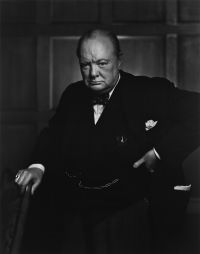 Winston Leonard Spencer Churchill,
We Shall Fight on the Beaches
(1940)
Winston Leonard Spencer Churchill,
We Shall Fight on the Beaches
(1940)
“ The whole root and core and brain of the British Army, on which and around which we were to build, and are to build, the great British Armies in the later years of the war, seemed about to perish upon the field or to be led into an ignominious and starving captivity. ”
Various, Blackwood's Edinburgh Magazine…
“ Glancing at the past year, we see the British army in new and strange alliance with its foe of centuries. Its leaders were either untried men, or men from whom, as previous trial had shown, nothing very remarkable was to be expected. Under such circumstances, the army was required to satisfy the expectations, not merely of a sovereign or a government, but a people. ”
R. W. Campbell, John Brown: Confessions of a New Army Cadet
“ If I, your colonel, have the courage to come and tell you of my own deficiencies, surely you boys will have the pluck to do a little heart-searching. You must also study the Service as a whole, and not in parts. Believe me, the British Army is a proud and glorious institution. The traditions are high. Great men have come from our ranks. In this war our arms are belaurelled with chivalry. Ours is no mercenary host, no band of knaves or babe-assassins. We fight a good fight. ”
Hubert Foster, Organization: How Armies are Formed for War
“ A study of the present British war organization,xix described in some detail in Part II., will show that it embodies a large number of the changes suggested by recent wars, and demanded by the trend of modern military thought. The British Army is the latest to be reorganized, and the opportunity has been taken, with no less courage than wisdom, to adopt in every Branch all changes tending to fit it better for the fighting of the immediate future, as far as this can be forecast. ”
Richard Cannon, Historical record of the Eighty-seventh Regiment… (1853)
“ The share which the British army have had in producing those events, and the high character with which the army will quit this country, must be equally satisfactory to every individual belonging to it, as they are to the Commander of the Forces, and he trusts that the troops will continue the same good conduct to the last. ”
Charles Cooper King, The Story of the British Army
“ The main “arm” in battle was the mailed cavalry, and infantry was long thought little of; but in England speedily grew up the steady and trustworthy bowmen, the foundation of that infantry which has carried the national flag to victory in every part of the world, and which had no counterpart in those days in foreign armies, such as France, where the footmen were, till much later, merely armed serfs or dependants, armed indifferently, and treated with contumely. In England it was otherwise. There were both greater freedom, and better, because more independent men. ”
The Seventeenth Highland Light Infantry…
“ From the good accounts that I have received of the Division, I am confident that the high traditions of the British Army are safe in your hands, and that with your comrades now in the Field you will maintain the unceasing efforts necessary to bring the War to a victorious ending. ”
Frederick Watson, The Story of the Highland Regiments
“ The British soldier is vigorous, well-fed, by nature both brave and intrepid, trained to the most rigorous discipline and admirably armed. The infantry resist the attacks of cavalry with great confidence, and when taken in flank or rear, British troops are less disconcerted than any European army. ”
Richard Cannon, Historical Record of the Seventy-Second Regiment…
“ PREFACE. The character and credit of the British Army must chiefly depend upon the zeal and ardour by which all who enter into its service are animated, and consequently it is of the highest importance that any measure calculated to excite the spirit of emulation, by which alone great and gallant actions are achieved, should be adopted. ”
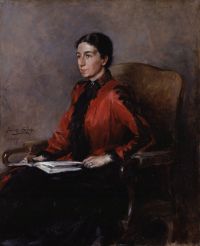 Mrs. Humphry Ward,
The War on All Fronts: England's Effort
Mrs. Humphry Ward,
The War on All Fronts: England's Effort
“ Remember first that every man, every horse, every round of ammunition, every article of clothing and equipment, all the guns and vehicles, and nearly all the food have to be brought across the English Channel to maintain and reinforce the ever-growing British Army, which holds now so important a share of the fighting line in France. ”
Evelyn Charles Vivian, The British Army from Within
“ There are those who belittle the Army and its ways and influence on the men who serve, but one who has served, with the perspective of time to give him clearness of vision, can always look back on the Army and be glad that he has learned its lessons, accomplished its tasks; the men who would belittle it are themselves very little men, too little to be worthy of serious notice. The British Army is a gathering of brave men, fighting in this year of grace 1914 in a noble cause, and fighting, as the British Army has always fought, bravely and well. ”
James M. Campbell, A British army, as it was, - is… (1840)
“ The British Army did not consist of the constrained conscripts of arbitrary power, but of citizens voluntarily in arms to defend their country, to obey and respect her laws at home, and to resist and repel, with their utmost energy, every effort of her foreign foes, &c. ”
Charles Cooper King, The Story of the British Army
“ The British marched across France, and embarked for England and America. The Spanish and Portuguese armies retired to their respective territories, and the French armies dispersed over France. The now fully established standing army of Great Britain had, notwithstanding the indiscipline and violence that at times unfortunately characterised its fighting, earned a reputation which it has never lost. ”
James M. Campbell, A British army, as it was, - is… (1840)
“ I do not presume to say, that the conduct of all corps of cavalry, infantry and artillery, were alike; but such officers as have been much employed with a British army in the field, must be aware of what he had to contend with, to prevent irregularities, and above all drunkenness, and the crimes arising out of its demoralizing effects, into which our soldiers invariably fell; so much so, that the greater part of them could never be trusted out of the sight of those who had the charge of them ”
W. H. Maxwell, The Victories of Wellington and the British Armies
“ The glory of the British army is based principally upon its excellent discipline, and upon the cool and sturdy courage of the people. Indeed we know of no other troops so well disciplined. The principal cause of their pre-eminence in this respect, would, if applied to the French army, most likely produce an effect diametrically opposite. Varieties of character and condition, require the employment of different means to obtain the same end. ”
James M. Campbell, A British army, as it was, - is… (1840)
“ The household corps of the British army represent a body of troops which, for appearance, for discipline, for intelligence, and for respectability, are unequalled by the troops of any other nation upon earth. ”
Charles Cooper King, The Story of the British Army
“ The army is as much part of the social and national life of England as its commercial marine, or its police force. It does the same duty on a large scale for the former as do the latter on a smaller scale in civil life. It protects the commercial enterprise of our merchant princes, finds new outlets for our manufacturers. It guards our seaports at home and abroad; it assists the civil police against the proletariat, and that without creating real hostility.It represents the fighting spirit that has made the nation what it is and has enlarged its boundaries. ”
Francis Dodd, Generals of the British Army (1917)
“ THIS small portrait gallery of British generals represents, in fair epitome, the drama of British history. Each of the officers who figure here has behind him a varied story of fighting in strange places, under all sorts of conditions, as well as in the tense atmosphere of modern scientific war; each of them has first had to struggle against heavy odds before arriving at the conditions which at present obtain on the Western front. Infantrymen, cavalrymen, artillerists, they have come through a fiery trial to command large bodies of troops in the most terrible struggle of our history. ”
James M. Campbell, A British army, as it was, - is… (1840)
“ The second army, to be officered as our present militia, and to be embodied upon the same system, and managed and disciplined as the first, and styled either Militia, or the Army of Reserve, could be called out to serve in Great Britain or Ireland only, when the country, either from being at war, or in case of commotions, might require its services ”
Charles Cooper King, The Story of the British Army
“ The number of well and continuously trained soldiers in Great Britain was far larger than at any previous period, and therefore formed a large nucleus from which a fresh, freely enlisted body could be recruited. It is difficult otherwise to account for the brilliant fighting power of the men who again began to make the name of the English army respected on the Continent, as in the days of Crecy and Poitiers. ”
Jean Christie Root, Nathan Hale
“ The army is improving in discipline, and it is hoped will soon be able to meet the enemy at any kind of play. My company which at first was small, is now increased to eighty and there is a sergeant recruiting who, I hope, has got the other ten which completes the company. We are hardly able to judge as to the numbers the British army for the Summer is to consist of—undoubtedly sufficient to cause us too much bloodshed. ”
James M. Campbell, A British army, as it was, - is… (1840)
“ I sincerely hope we shall never again hear of such things being practised in a British army; and no commanding officer should be allowed to keep his regiment longer than an hour and a half, or two hours at a time under arms, which will be found quite sufficient, if well occupied, for every useful purpose of instruction; especially as at almost every parade, a battalion ought to be made to perform a movement or two before it is dismissed. ”
Anonymous, Regimental Nicknames and Traditions of the British Army
“ The traditions of the British Army stretch back over four centuries, during which it has been the acknowledged means of winning and building up the greatest Empire the world has ever known. The Army's deeds are a sealed book so far as the general public are concerned, for military matters except in times of actual war have never been a popular subject, the great heroes of the battlefield being far less known to the British public than popular performers on the football field or pampered professional boxers. ”
Evelyn Charles Vivian, The British Army from Within
“ To these must be added the Royal Engineers, the Army Service Corps, the Royal Ordnance Department, the R.A.M.C., the Army Pay Corps, and other non-combatant units necessary to the domestic and general internal working of an army. To-day these various forces are increased to such an extent that no man outside the War Office can tell the strength of infantry, cavalry, and artillery ”
Reginald Hodder, British Regiments at the Front…
“ Well does the historian say that "their annals indeed may almost be said to be identical with those of the British Army, as in every campaign of importance—every campaign which has had a material bearing on the fortunes of the Commonwealth—their services have been called into requisition. ”
 Joseph Plumb Martin,
The Adventures Of A Revolutionary Soldier
(1830)
Joseph Plumb Martin,
The Adventures Of A Revolutionary Soldier
(1830)
“ We were immediately ordered from our old detachment and joined another, the whole composing a corps of about five hundred men. We instantly marched towards the enemy's right wing, which was in the orchard, and kept concealed from them as long as possible, by keeping behind the bushes. When we could no longer keep ourselves concealed, we marched into the open fields and formed our line. The British immediately formed and began to retreat to the main body of their army. ”
Richard Cannon, Historical Record of the Twenty-first Regiment…
“ The rank and influence which Great Britain has attained among the nations of the world, have in a great measure been purchased by the valour of the Army, and to persons who have the welfare of their country at heart, the records of the several regiments cannot fail to prove interesting. ”
James M. Campbell, A British army, as it was, - is… (1840)
“ To effect some of the objects I have in view, it should be permanently settled, how many corps of cavalry, infantry, engineers, artillery, and marines, are to constitute the regular army of Great Britain and Ireland; and their respective establishments in officers should likewise be permanently fixed upon; for I am most anxious, and I consider it to be practicable, to do away with half-pay to officers ”
Charles Cooper King, The Story of the British Army
“ A night march, covered by the clever stratagem of leaving fires alight when the main body moved off, and a rearguard to work noisily at trenches, resulted in a battle, after which the 40th, 17th, and 55th British regiments fell back in disorder, and the ultimate result was the abandonment of the Jerseys by the British army. In June 1777, the relative strength of the combatants was 30,000 British troops against 8000 Americans. ”
Charles Cooper King, The Story of the British Army
“ THE BRITISH ARMY CHAPTER I THE ARMY OF THE PEOPLE—TO 1100 All nations have passed, more or less, through the same stages in the up-growth of that military system which is as essential to the political security of the mass as the formation of a police force is necessary for the protection of the individual in civil life. From the outset, the history of human existence has been one of combat. ”
Anonymous, Regimental Nicknames and Traditions of the British Army
“ George's Day, and are looked upon as the representative English infantry regiment in the British Army and their crest of St. George and the Dragon is unique.All Fusilier regiments wear sealskin fusilier caps with distinctive plumes, and a grenade as a badge. The Royal Fusiliers is best known as the City of London Regiment, and has some peculiar privileges in consequence, one of these being the right to march through the City of London with fixed bayonets, colours flying, and drums beating, without first obtaining the permission of the Lord Mayor and Aldermen. ”
Related terms
Authors who wrote about “British Army”
Charles Cooper KingRichard CannonA British officerFrancis DoddSun Tzu Ulysses S. GrantEvelyn Charles VivianJ. RossW. H. MaxwellJames Wolfe
 Spenser WilkinsonJoseph Plumb MartinHubert Foster
 Mercy Otis WarrenKelly MillerReginald Hodder
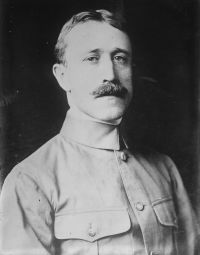 Frederick Palmer
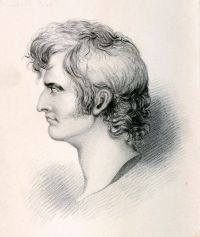 William Francis Patrick NapierJean Christie RootAnonymous
Ulysses S. GrantEvelyn Charles VivianJ. RossW. H. MaxwellJames WolfeSpenser WilkinsonJoseph Plumb MartinHubert FosterMercy Otis WarrenKelly MillerReginald HodderFrederick PalmerWilliam Francis Patrick NapierJean Christie RootAnonymous