Croatia

Definition and stakes

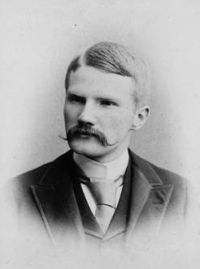
Kingsley Garland Jayne,  1911 Encyclopædia Britannica, Volume 7… (1911)

“ The want of a strong native middle class may partly be traced to this tendency.
History.
Medieval historians did not use the terms Croatia and Slavonia in their present sense. The Croatia of the middle ages comprised north-western Bosnia, Turkish Croatia, and the region now known as Upper Croatia. The whole country between the Drave and Save, thus including a large part of modern Croatia, was called in Latin Slavonia, in German Windisches Land, and in Hungarian Tótország, to distinguish it from the territories in which the Croats were racially supreme (Horvátország) .
”
Source: Wikisource

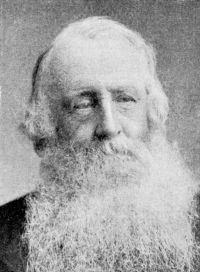
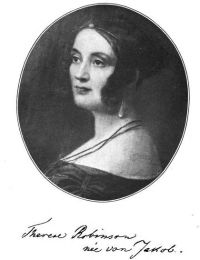
Portrait of Talvj Talvj,  Historical View of the Languages and Literature of the Slavic Nations

“ The Austrian kingdom of CROATIA in our time, between Styria, Hungary, Slavonia, Bosnia, Dalmatia, and the Adriatic, is not the ancient Croatia of Constantine Porphyrogenitus. Together with the Croatian colonists in Hungary, and the inhabitants of the Turkish Sandshak Banialouka, it contains about 800,000 souls. Of these less than 200,000 belong to the Greek Church; the great majority are Catholics. ”
Source: Gutenberg

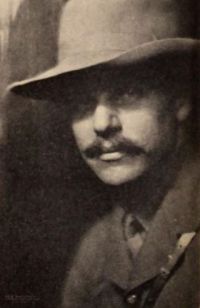
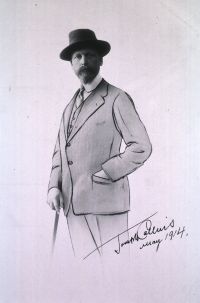
Portrait of Charles Homer Haskins Charles Homer Haskins,  Some Problems of the Peace Conference (1920)

“ Farther to the westward lies the historic kingdom of Croatia, which has for eight hundred years been bound to Hungary by ties which no one could ever quite satisfactorily define, but which have often been compared to the connection between England and Ireland. In the last half century at least, Magyar-Croat relations have been even less serene and amicable than Anglo-Irish ones. It goes almost without saying that Croatia has now, of her own choice, united with Serbia and the Slovene lands of Austria to form the new state popularly called Yugo-Slavia. ”
Source: Gutenberg

Get perspective with Kwize: daily news enlightened by great literature