F. Hamilton Jackson

Biographical details

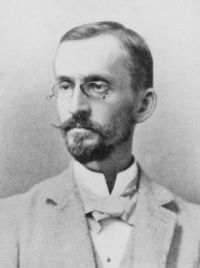
Portrait of F. Hamilton Jackson F. Hamilton Jackson,  The Shores of the Adriatic

“ In a couple of hundred paces or so the vegetation changes its character from that of upper Italy to the softness of the southern islands, the sheltered slope to the sea being like an evergreen garden. Aloes root in the rocks as at Sorrento, and even in winter the purple cyclamen may be found in flower. Its name in antiquity was Castrum Pucinum. Here Augustus had a villa, whence the best wine for his table was brought. From the line, too, the campanili of Grado and Aquileia are visible, far away over the plain, dark against lagoon or sky in the evening, or flashing white in the morning sun. ”
Source: Gutenberg

Portrait of F. Hamilton Jackson F. Hamilton Jackson,  Intarsia and Marquetry

“ The question of the limits within which the craftsman's effort should be confined in any form of art craftsmanship is a thorny one, for the attempt to overstep those limits has always had attractions for the craftsman who is master of his craft, and who sighs for fresh fields to conquer, knowing better than the outsider what are the difficulties which he has overcome successfully in any piece of work from the side of craftsmanship, though often with disastrous results when the matter is regarded from the point of view of excellence in design and purity of taste. ”
Source: Gutenberg

Portrait of F. Hamilton Jackson F. Hamilton Jackson,  The Shores of the Adriatic

“ As the sun sinks lower, leaving the sea in shadow, the glow upon the hills becomes more and more roseate, till at last it fades, as the strait is passed and the harbour opens. The smoke from a cement factory hangs in the air like evening mists in an English valley; and, as we approach still nearer, the long line of buildings upon the quays, dominated by the great campanile and the colonnade of Diocletian's palace, gradually grows more impressive in the failing light. ”
Source: Gutenberg

Get perspective with Kwize: daily news enlightened by great literature