Cullen

Definition and stakes

Joseph Payne and Clifford Allbutt,  1911 Encyclopædia Britannica (1911)

“ These pathological principles of Cullen are contained in his First Lines of the Practice of Physic, an extremely popular book, often reprinted and translated. More importance is to be attached to his Nosology or Classification of Diseases. The attempt to classify diseases on a natural-history plan was not new, having been commenced by Sauvages and others, and is perhaps not a task of the highest importance. Cullen drew out a classification of great and needless complexity, the chief part of which is now forgotten, but several of his main divisions are still preserved. ”
Source: Wikisource

Roswell Park,  An Epitome of the History of Medicine

“ In this way Cullen was enabled to graduate in 1740. Six years later he taught chemistry in Glasgow, and in ten years more came to Edinburgh as Professor of Medicine. He continued very active and famous up to the time of his death, but died as he had been born,—in poverty. Among his numerous other charitable deeds, he supported the widow of Robert Burns and published the latter's poems.
Cullen was the father of modern Solidism,—a system based upon the solid parts of the body, the nerves being the chief agents.
”
Source: Gutenberg

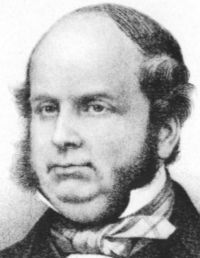
Portrait of Henry Thomas Buckle Henry Thomas Buckle,  History of Civilization in England…

“ At all events, the Nosology of Cullen, though it exhibits clear traces of his powerful and organizing mind, is fast falling into disrepute, and we may be sure, that, for a long time yet, a similar fate will await its successors. Our pathological knowledge is still too young for so great an enterprise. ”
Source: Gutenberg

Get perspective with Kwize: daily news enlightened by great literature