Dalroy

Definition and stakes

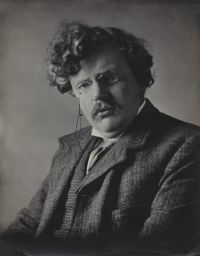
Portrait of G. K. Chesterton G. K. Chesterton,  The Flying Inn

“ Both Pump and Dalroy thought they had never seen a man look so sullen. His face was of the rubicund sort that does not suggest jollity, but merely a stagnant indigestion in the head. His mustache hung heavy and dark, his brows yet heavier and darker. Dalroy had seen something of the sort on the faces of defeated people disgracefully forced into submission, but he could not make head or tail of it in connection with the priggish perfections of Peaceways. ”
Source: Gutenberg

Portrait of G. K. Chesterton G. K. Chesterton,  The Flying Inn

“ And he moved the cheese well into the arch of the tunnel. Dalroy still sat with his square chin on his hand, staring at the mystery of the little wood.
“You seem absent-minded, Captain,” remarked Humphrey.
“The deepest thoughts are all commonplaces,” said Dalroy. “That is why I believe in Democracy, which is more than you do, you foul blood-stained old British Tory. And the deepest commonplace of all is that Vanitas Vanitatem, which is not pessimism but is really the opposite of pessimism. It is man’s futility that makes us feel he must be a god.
”
Source: Gutenberg

Portrait of Gilbert Keith Chesterton Gilbert Keith Chesterton,  The Flying Inn — Chapter XVIII (1914)

“ When the last long-haired phantom had faded up the road, Dalroy sprang from the car and drove the sign-board deep into the earth with savage violence, and then very quietly knocked at the door.
The apparent owner of the place, of whom the two last of the long-haired and bare-footed idealists were taking a rather hurried farewell, was a man curiously ill-fitted for the part he seemed cast for in the only possible plot.
Both Pump and Dalroy thought they had never seen a man look so sullen.
”
Source: Wikisource

Get perspective with Kwize: daily news enlightened by great literature