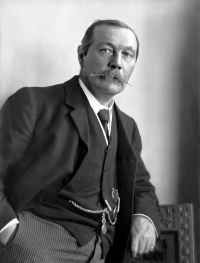
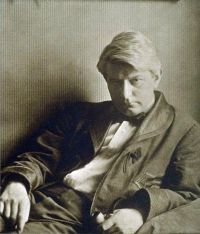
“ The night in Dover Street was rent with the cries of wrong, but the thunders of truth crashed through the pitiful clamor and died out in prophetic silences.Outwardly, Dover Street is a noisy thoroughfare cut through a South End slum, in every essential the same as Wheeler Street. Turn down any street in the slums, at random, and call it by whatever name you please, you will observe there the same fashions of life, death, and endurance. Every one of those streets is a rubbish heap [287] of damaged humanity, and it will take a powerful broom and an ocean of soapsuds to clean it out. ”
Dover Street
Definition and stakes
Quotes about “Dover Street”
“ The memory of my experience on Dover Street became the strength of my convictions, the illumined index of my purpose, the aureola of my happiness. And if I paid for those lessons with days of privation and dread, with nights of tormenting anxiety, I count the price cheap. Who would not go to a little trouble to find out what life is made of? Life in the slums spins busily as a schoolboy's top, and one who has heard its humming never forgets. I look forward to telling, when I get to be a master of language, what I read in the crooked cobblestones when I revisited Dover Street the other day. ”
“ It was good to get out of Dover Street—it was better for the growing children, better for my weary parents, better for all of us, as the clean grass is better than the dusty pavement. But I must never forget that I came away from Dover Street with my hands full of riches. I must not fail to testify that in America a child of the slums owns the land and all that is good in it. ”
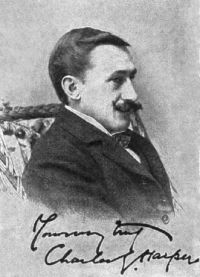
Charles G. Harper,
The Dover Road: Annals of an Ancient Turnpike
“ Here, on these ancient dust-heaps and kitchen-middens stands the chief business street of Dover, Snargate Street, running parallel with the sea, but now separated from it by the breadth of the Harbour and many intermediate alleys, smelling vehemently of tar and stale reminiscences of ocean. Snargate Street is long and narrow, a model neither of cleanliness nor of convenience, and it crouches humbly beneath the towering cliffs which rise on its landward side, cut, carved, and tunnelled ”
“ It is late before Dover Street begins to go to bed. It is past midnight before I feel that I am alone. Seated in my stiff little chair before my narrow table, I gather in the night sounds through the open window, curious to assort and define them. As, little by little, the city settles down to sleep, the volume of sound diminishes, and the qualities of particular sounds stand out. The electric car lurches by with silent gong, taking the empty track by leaps, humming to itself in the invisible distance. ”
Charles G. Harper,
The Dover Road: Annals of an Ancient Turnpike
“ And see what portentous shadows crowd the long reaches of the Dover Road, and demand attention! Cæsar’s presence haunts the weird plateau of Barham Downs, and the alert imagination hears the tramp of the legionaries along Watling Street on moonlit [Pg 2] nights. Shades of Britons, Saxons, Danes, and Normans people the streets of the old towns through which the highway takes its course, or crowd in warlike array upon the hillsides. ”
“ I find that I have always given nature a chance, I have used my opportunities, and have practised self-expression. So much my enemies will grant me; more than this my friends cannot claim for me.In the Dover Street days I did not philosophize about my private character, nor about the immigrant and his ways. I lived the life, and the moral took care of itself. And after Dover Street came Applepie Alley, Letterbox Lane, and other evil corners of the slums of Boston, till it must have looked to our neighbors as if we meant to go on forever exploring the underworld. ”
H. G. Wells,
The Works of H. G. Wells
(1925)
“ He went down Dover Street in a state of profound melancholia—at the pace and mood as it were of his own funeral procession—and he crossed at the corner of Tontine Street heedless of all mundane things. And there it was that Fortune came upon him, in disguise and with a loud shout, the shout of a person endowed with an unusually rich, full voice, followed immediately by a violent blow in the back. His hat was over his eyes and an enormous weight rested on his shoulders and something kicked him in the back of his calf. ”
Charles G. Harper,
The Dover Road: Annals of an Ancient Turnpike
“ Englishmen were ashamed of this disgraceful entrance into London, and one whose duty lay in bringing a representative foreigner from Dover to London craftily contrived that he should enter the Metropolis at night, when the dirty tenements of Kent Street, by which their carriage would pass, would be hidden in darkness. When Newington Causeway was made, and direct access gained to the Old Kent Road, the horrors of Kent Street were no longer to be braved by travellers. ”
“ Outside America I should hardly be believed if I told how simply, in my experience, Dover Street merged into the [362] Back Bay. ”
Charles G. Harper,
The Dover Road: Annals of an Ancient Turnpike
“ Leaving the heath by the Dover Road, which still follows the old Watling Street, the way is bordered by apparently endless rows of villas, and the outskirts of Kidbrook and Charlton village are passed before one comes to where the fields, bordered by hedgerows, first come in sight, and even these are disfigured by great boards, offering land to be let for building-plots. ”
“ And we certainly are not taking the moral to heart when we try to make a hero out of the boy by such foreign appliances as grammar and algebra, while utterly despising the fittest instrument for his uplifting—the boy's own body.We had no particular reason for coming to Dover Street. It might just as well have been Applepie Alley. For my father had sold, with the goods, fixtures, and good-will of the Wheeler Street store, all his hopes of ever making a living in the grocery trade ”
Charles G. Harper,
The Dover Road: Annals of an Ancient Turnpike
“ For the Dover Road is actually the initial limb of the Watling Street: that prehistoric British trackway adopted by the Romans and by them engineered into a road; and it would seem that those Roman engineers, instructed by the Imperial authorities, considered rather the military and strategic needs of those times than those of Londinium; for London was not on the direct road they made; and it was only at a later date, when it was grown commercially, they constructed an alternative route that served it. ”
Charles G. Harper,
The Dover Road: Annals of an Ancient Turnpike
“ The great multitude of travellers with which Dover was crowded afforded a reason for dispensing with a police regulation which forbade public conveyances to travel on Sundays, and on that day he set out with seven other passengers in two carriages called (“called,” you notice, like that street in Jerusalem that was “called” straight) “flying machines.” There were six horses to a machine, and they covered the distance to London in one day for one guinea each person; passengers’ servants carried outside at half-price. ”
Charles G. Harper,
The Dover Road: Annals of an Ancient Turnpike
“ From Springhead the Watling Street continued through Cobham Park, and so at length to a junction with the Dover Road, as already noted, at Strood.Meanwhile, the more or less modern highway goes on through a dusty district where the builder is contending with the country, and, judging from appearances, he seems likely to get the best of it. ”
Charles G. Harper,
The Dover Road: Annals of an Ancient Turnpike
“ The original meaning of “Watling Street” is never [Pg 96] likely to be determined to the satisfaction of all antiquaries, and its age is equally a contested point. But that a street or a trackway of some kind, of an identical route with the present highway, ran between London and Dover long before Cæsar landed can scarce be matter for doubt. ”
Charles Hemstreet, Nooks and Corners of Old London
“ Hill the heads of executed persons as an example to evildoers. Here was exposed the head of Thomas Wyatt the younger, in the rebellion of 1554 when he was captured after his attack on Ludgate Hill.In Berkeley Street a few doors south of Berkeley Square lived Alexander Pope, the poet, on the east side of the street opposite Lansdowne House.Dover Street, named for a very early resident, Henry Jermyn, Lord Dover, was long a thoroughfare noted for the homes of statesmen. John Evelyn, the diarist, lived here, near Piccadilly, and in 1705 died here. To-day it is wholly given over to trade. ”
Charles G. Harper,
The Dover Road: Annals of an Ancient Turnpike
“ Perhaps the most remarkable feature of the old houses here and at Rochester, and, indeed, along a great portion of the Dover Road, is the great use [Pg 101] of weather-boarding, chiefly on the upper storeys. An instance of this is seen at Strood at an inn, the “Crispin and Crispianus,” standing in the main street. A still more interesting point about this old house is its pictorial swinging sign, overhanging the pathway—a representation of the two shoemaker brothers, Crispin and Crispian, at work, cobbling boots. The brothers were Christian martyrs who suffered death at Soissons, A.D. 287. ”
Charles G. Harper,
The Dover Road: Annals of an Ancient Turnpike
“ Proceeding thenceforward on the lines of the present Dover Road, the Roman road came to their next station of Durolevum, whose site no antiquary has fixed convincingly, but which might have been at either Sittingbourne, Ospringe, Davington, or Key Street. Thence it reached Durobrivae, which was certainly on the site of Rochester. Crossing the Medway by a trajectus, or perhaps even by a bridge of either stone or wood, the road passed through Strood, and branched off through Cobham, coming again to the modern highway at Dartford Brent. ”
Charles G. Harper,
The Dover Road: Annals of an Ancient Turnpike
“ Here they fought in small bands, protected by mounds and trenches and by felled trees cunningly interlaced. One of these oppida remains in Bourne Park, on the summit of Bridge Hill and beside the Watling Street which, until 1829, was identical with the Dover Road. In that year a slight deviation was made to the left over the hilltop for about two hundred yards’ length of roadway, and in the course of cutting through the hill a number of Roman urns and skulls were discovered at a depth of five feet. ”
W. F. Grew, The Cycle Industry (1921)
“ Watling Street is probably the most ancient road in the Kingdom. It is supposed to have existed prior to the first Roman invasion, but it was the Roman conquest that caused it to be improved and extended. Originally, it stretched from near Dover to Wroxeter and probably north to Chester or Carlisle. Cyclists riding from Dover to London follow the line of the old highway by what is known to-day as the Dover Road; the Street went right through the heart of London, issuing at Edgware. ”
Charles G. Harper,
The Dover Road: Annals of an Ancient Turnpike
“ They rise from their camp of nineteen hundred years ago; they march along the Watling Street that was made by their descendants; and the sheen of their armour, the glitter of the pale moonlight on their eagle standards, and the tramp of many feet are as real to the imaginative traveller, if not of a greater reality, than the moaning telegraph that runs on countless poles in a diminishing procession beside the road as far as eye can reach. ”
Ann Fanshawe, Memoirs of Lady Fanshawe
“ So great were the acclamations and numbers of people, that it reached like one street from Dover to Whitehall: we lay that night at Dover, and the next day we went in Sir Arnold Braem's [Footnote: Of a Dutch family settled at Bridge, in Kent. The house at Dover, in which Lady Fanshawe lay, was built by Jacob Braem, and is, or was in Hasted's time, the Custom-house. The family is now extinct.] coach towards London, where on Sunday night we came to a house in the Savoy. ”
Charles G. Harper,
The Old Inns of Old England, Volume 1…
“ In these times, when the blasted dust of the Dover road is the most noticeable feature, and a half-century has effected all manner of wonderful changes, tramps and their kin find no harbourage at the old house, whose invitation to cyclists and amateur photographers sufficiently emphasises its improved status.In Great Expectations is found a notice of the “Cross Keys,” Wood Street, Cheapside, a coaching inn abolished in the ’70’s; but it is merely an incidental reference, on the occasion of Pip’s coming to London by coach from Rochester. ”
Sir Adolphus William Ward,
Dickens
“ The whole stupendous property is on the old Dover road....”Among “the blessed woods and fields” which, as he says, had done him “a world of good,” in a season of unceasing bodily and mental unrest, the great English writer had indeed found a habitation fitted to become inseparable from his name and fame. It was not till rather later, in 1860, that, after the sale of Tavistock House, Gad’s Hill [Pg 142] Place became his regular abode, a London house being only now and then taken for the season, while furnished rooms were kept at the office in Wellington Street for occasional use. ”
Charles G. Harper,
The Dover Road: Annals of an Ancient Turnpike
“ Sittingbourne had grown into importance because its situation was convenient for travellers to stay here to change horses at, and when the roads became deserted the place would have fallen back into its original obscurity had it not been for bricks, hops, and cherries. Bricks, and the surrounding fruit country have prospered it anew, and have made it what it is; a dusty, thickly populated, dirty town whose old aspect has been altered from a broad and roomy street to crowded lanes and a High Street filled with frowzy alleys, and many Dissenting conventicles of different degrees of ugliness. ”
Charles G. Harper,
The Dover Road: Annals of an Ancient Turnpike
“ Near it, let into the seventeenth-century brick frontage of No. 71, High Street, is the old sign of the “Hare and Sun,” the trade-mark of Nicholas Hare; and this, together with the stone half-moon sign in the yard of the “Half Moon Inn,” is the sole relic of the many devices that once decorated the street. The hop trade has taken almost undivided possession of the place nowadays. The Hop Exchange is over the way, and hop-factors are as frequently to be met with here as diamond-merchants in Hatton Garden; and with their coming the old-fashioned appearance of Southwark High Street is gone. ”
Charles G. Harper,
The Dover Road: Annals of an Ancient Turnpike
“ An open gutter ran down the middle of the street, full of rotting refuse; every tradesman hung out signs which sometimes fell down and killed people, and in the night, when the wind blew strong, a concert of squeaking music filled, with sounds not the most pleasant, the ears of people who wanted to go to sleep. ”
Charles G. Harper,
The Dover Road: Annals of an Ancient Turnpike
“ Bridge Foot is a thing of the past, and London Bridge Station stands on the site of it. “High Street, Borough,” too, is very different from not only mediæval days, but even from coaching times. The many old inns that used to front toward the street, dating their prosperity [Pg 8] back to the twelfth century, and their fabric to some time subsequently to the fire of 1676, are nearly all either utterly demolished, or are put to use as railway receiving offices. The “Queen’s Head” is gone; the “George,” most interesting of all that remain here, is threatened ”
Charles G. Harper,
The Dover Road: Annals of an Ancient Turnpike
“ The village consists of a long street beside the highway at the foot of Judd’s Hill, and of a shorter street, called Water Lane, that runs off at right angles where the remains of the Maison Dieu stand beside the stream to which Ospringe owes its rather pretty name. At one time this stream flowed openly across the roadway, but it is bridged now, and Water Lane, which had a raised footpath on either side, while the lane itself was occupied by the stream, through which horses and carts splashed, has now been drained dry. ”
Charles G. Harper,
The Dover Road: Annals of an Ancient Turnpike
“ Along this road comes daily and all day a varied procession of tramps. The traveller looks down upon them from this eyrie with wonderment and dismay; the cottagers, the householders and gardeners hereabouts, see them pass with less surprise and additional misgivings, for their gardens, their hen-roosts, clothes-lines and orchards pay tribute to these Ishmaelites to whom the rights of property are but imperfectly known. This is why the gates and doors along the Dover Road are so uniformly and resolutely barred, bolted, chained, and padlocked ”