Earl of Arran

Definition and stakes

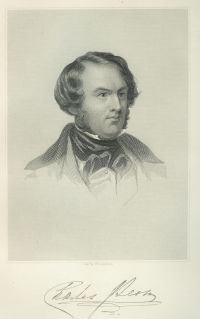
Portrait of John Cassell John Cassell Cassell's Illustrated History of England (1865)

The Earl of Arran, James Hamilton, on the other hand, declared this will to be a forgery, and being himself the nest heir to the throne, after the infant queen, he assumed the right to make himself her guardian, and to order the kingdom for her. By means of the Protestant nobles, as well as the vassals of his own house, and the prevailing opinion that Beaton had forged the will, Arran succeeded in establishing himself as regent on the 22nd of December, 1542, and the Protestant influence was in the ascendant.
Source: Wikisource

Various Encyclopaedia Britannica, 11th Edition…

Meanwhile, immediately on the repudiation of the treaty, war had broken out with England, and Arran was unable either to maintain order within the realm or defend it from outside aggression, the Scots being defeated at Pinkie on the 10th of September 1547. He reluctantly agreed in July 1548 to the marriage of the dauphin with Mary, whom he had designed for his son, to the appeal for French aid, and to the removal of Mary for security to France, and on the 5th of February 1549 was created duke of Châtelherault in Poitou, his eldest son James being henceforth commonly styled earl of Arran.
Source: Gutenberg

W. R. H. Trowbridge Court Beauties of Old Whitehall…

Judging from the virtuous, no less than the vicious, men on whom she cast her spells, my Lady Shrewsbury, like King Arthur's sister Morgan le Fay, must have possessed the secret of enchantment. Not otherwise can one explain how the Earl of Arran, the noble Duke of Ormond's noble son, became the first and most ardent of her many lovers. This brave and upright young man long languished a slave to the passion with which she had inspired him. Perhaps, so powerful and seductive was her charm, he might never have been freed but for her own caprice.
Source: Gutenberg

Get perspective with Kwize: daily news enlightened by great literature