Earth's core

Definition and stakes

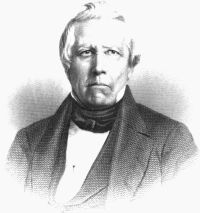
Portrait of William Herbert Hobbs William Herbert Hobbs,  Earth Features and Their Meaning

“ Provisionally, therefore, we may regard the earth’s core as rigid and essentially solid. It was long ago pointed out by the late Lord Kelvin that if our lithosphere were not more rigid than a ball of glass of the same size, it would be constantly passing through periodic six-hourly distortions of great amplitude in response to the varying attractions of the moon. ”

Source: Gutenberg

Henry Raymond Rogers,  New and Original Theories of the Great Physical Forces

“ The laws of conservation may not be violated: the earth will respond.
How are the Spheres constructed?
The constitution of these two retro-acting spheres, and consequently of all the others of [Pg 26] the heavenly host, [3] at this point demands our attention. How are the spheres made up? How speaks the earth? The earth with which we are familiar—our sample—is formed of a slight crust, a core, to a greater or less extent and degree incandescent, and measuring 250,000 millions of cubic miles in dimensions, also an envelope which we call the atmosphere.
”
Source: Gutenberg

Edwin Sharpe Grew,  The Romance of Modern Geology

“ From this brief sketch of the formation of the earth, its progress and processes, and from the hints which the volcanoes and earthquakes of to-day afford us, we may obtain some idea of the underworld that lies far beneath our feet. Not much, however, for we are ignorant of the actual conditions which exist towards the centre of the earth. But there seems a strong case for supposing that there is an outer solid crust of earth and an inner molten core of very great heat. ”
Source: Gutenberg

Get perspective with Kwize: daily news enlightened by great literature