Earth's hemispheres

Definition and stakes

Florence M. Grimm,  Astronomical Lore in Chaucer

“ We know that the earth’s surface is divided into halves, called the northern and southern hemispheres, by an imaginary circle called the equator, whose plane passes through the center of the earth and is perpendicular to the earth’s axis. If the plane of the earth’s equator were infinitely extended it would describe upon the celestial sphere a great circle which would divide that sphere into two hemispheres, just as the plane of the terrestrial equator divides the earth into two hemispheres. ”
Source: Gutenberg

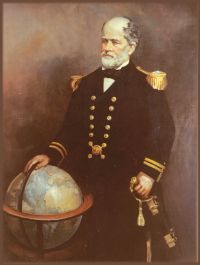
Portrait of Matthew Fontaine Maury Matthew Fontaine Maury,  Physical Geography of the Sea and its Meteorology (1864)

“ Its influence upon climates.—In order to trace a little farther, in our blind way, the evidences of wisdom and design, which we imagine we can detect in the terrestrial arrangement of land and water, let us fancy the southern hemisphere to have the land of the northern, and the northern to have the water of the southern, the earth's orbit remaining tho same. Is it not obvious to our reason that by this change the whole system of climatology in both hemispheres would be changed? The climates of our planet are as obedient to law as the hosts of heaven. ”
Source: Wikisource

Portrait of Sir Thomas Little Heath Sir Thomas Little Heath,  The Copernicus of Antiquity (Aristarchus of Samos…

“ The revolution of these two hemispheres round the earth produces at each point on its surface the succession of day and night. Empedocles held the sun to be, not fire, but a reflection of fire similar to that which takes place from the surface of water, the fire of a whole hemisphere of the world being bent back from the earth, which is circular, and concentrated into the crystalline sun which is carried round by the motion of the fiery hemisphere. ”
Source: Gutenberg

Get perspective with Kwize: daily news enlightened by great literature