Edward Lyttelton

Definition and stakes

Legal Lore: Curiosities of Law and Lawyers

“ Lyttelton then armed sixty men and took the cattle back by force; Dudley armed 700 men to fetch them back and kill them. For this offence the nobleman and eighty followers were indicted, but by one means and another the proceedings were made to last four years, and then an agreement was entered into by the parties. Lord Edward’s son, Ferdinando, was the hero of the next exploit. He purchased the property of an oppressed widow, named Martha Grovenor, for £1200, but only paid £100. ”
Source: Gutenberg

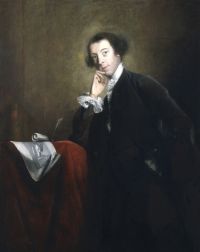
Portrait of Horace Walpole Horace Walpole,  Memoirs of the Reign of King George the Second…

“ Lyttelton, whose sister he had married, solicited Mr. Pelham to save him. Mr. Pelham answered, “I know nothing of Dr. Ayscough—oh, yes, I recollect, a very worthy man told me in this room two years ago that he was a great rogue!” It was Lyttelton himself who had quarrelled with him about an election business. Ayscough, who was an insolent man, unwelcome to the Clergy on suspicions of heterodoxy, and of no fair reputation for integrity, had been placed by Lyttelton and Pitt with [80] the Prince, into whose favour he had worked himself, chiefly by partialities to Prince Edward ”
Source: Gutenberg

Portrait of Leslie Stephen Leslie Stephen,  Dictionary of National Biography… (1893)

“ The boy learnt to read very early, wrote poems at the age of seven, and was considered in the family to be a prodigy. Old Mr. Lytton died on 30 Dec. 1810. His library was sent to London, where the grandson dipped into some of the books. The books had soon to be sold, and three sides of the Knebworth quadrangle were pulled down to suit the house to Mrs. Bulwer's diminished means. Edward asked his mother one day whether she was ‘not sometimes overcome by the sense of her own identity,’ to which she replied that it was high time that he should go to school. His school career was desultory. ”
Source: Wikisource

Get perspective with Kwize: daily news enlightened by great literature