Eleventh Amendment to the United States Constitution

Definition and stakes

William D. Guthrie,  Magna Carta, and Other Addresses

“ There is no longer any question but that the eleventh amendment does not shield state officers from suits at law in a court of the United States to recover damages for any invasion of private rights under the color of an unconstitutional statute, or to recover possession of real property in the custody of such officers. The rule is axiomatic that no officer in this country is so high that he is above the Constitution of the United States, and that no officer of the law, state or national, may violate it under the color or excuse of a statute, national or state, in conflict with its provisions. ”

Source: Gutenberg

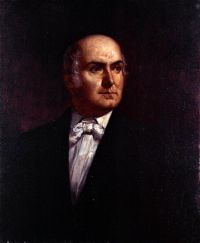
Portrait of Spencer Roane Spencer Roane,  On the Lottery Decision, No. 1 (1821)

“ It claims this right in the teeth of the eleventh amendment to the constitution, and of the enumeration contained in the third article of the original constitution, which specified the cases in which the states consented to be sued, in the federal court, and in which specification, the present case is not included. It claims it, also, in defiance of the tenth amendment to the constitution, which provides, that powers not delegated to the United States by the constitution, shall be deemed to be reserved to the several states. ”
Source: Wikisource

Prout v. Starr — Opinion of the Court

“ Much less can the 11th Amendment be successfully pleaded as an invincible barrier to judicial inquiry whether the salutary provisions of the 14th Amendment have been disregarded by state enactments. On the other hand, the judicial power of the United States has not infrequently been exercised in securing to the several states, in proper cases, the immunity intended by the 11th Amendment. ”
Source: Wikisource

Get perspective with Kwize: daily news enlightened by great literature